












A door that won’t latch properly is the kind of problem that starts as a minor irritation and grows from there. You push it shut, hear a click, and find it open again two minutes later. Or the latch bolt (i.e., the small tongue that sticks out from the door edge) slides right past the strike plate on the frame without catching. It can happen in old homes, newly renovated spaces, and brand-new builds alike.
Most people assume that the door itself is faulty. The truth is that the latch problem is almost always caused by something structural, such as something in the frame, the hinges, or the fit between the door and the opening. The door itself is usually fine.
The good news is that most of these problems are fixable without having to replace anything. A few take twenty minutes and a screwdriver. Others need a bit more attention, but none require you to be a seasoned contractor.
Here, we look at why pre-hung interior doors fail to latch and what you can do to fix each problem, so you can stop fighting with your door and get back to your day.
Most Common Causes Behind Pre-Hung Interior Doors Not Latching

Understanding the root cause of why your pre-hung door is not latching is the first step in repairing it. Once you know what is actually going wrong, the fix becomes much clearer.
1. The Strike Plate Is Not Lined Up with the Latch Bolt
This is the most common reason an interior door fails to latch. The strike plate is the small metal piece on the door frame, and the latch bolt needs to slide directly into its opening to lock the door in place. When the two are out of alignment even slightly, the latch bolt hits the edge of the plate instead of going through it.
You can check this without any tools. Close the door slowly and watch where the latch bolt makes contact with the strike plate. If it is hitting the top or bottom edge of the opening, the plate needs to move up or down. If the latch bolt is pressing against the flat face of the plate, the plate is sitting too far out from the frame.
For a minor misalignment, use a metal file to widen the strike plate opening slightly. For a bigger gap, remove the plate, fill the old screw holes with wood glue and toothpicks, let it dry completely, and reposition the plate in the right direction. Using long screws when you reinstall the plate helps it hold firmly and reduces the chance of it shifting again with regular use.
2. The Door Has Settled Out of Square
Wood in a house frame moves with the seasons. It expands in high humidity and shrinks when the air dries out. Over time, that movement can shift a door frame enough that the door no longer sits evenly in the opening. When this happens, the door rubs against the frame on one side and pulls away on the other, and the latch stops lining up with the strike plate.
You can check for this by looking at the gap around the door when it is fully closed. That gap should be even on all sides. If the gap is wider at the top on one side and tighter at the bottom, the frame has moved. That means it is no longer sitting straight up and down the way it should.
The fix depends on how far things have moved. If the shift is small, adjusting the hinges can often bring the door back into the correct position. If the frame itself has moved significantly, you may need to remove the casing (i.e., the decorative trim around the frame), re-check it with a level, and re-shim it before reinstalling.
In Canadian homes where humidity changes between seasons are considerable, this kind of gradual settling is worth addressing properly rather than working around it with a quick plate adjustment.
3. The Hinges Are Loose or Worn
Loose hinges are a cause of latching problems that people often miss. When a hinge is not held firmly to the door or the frame, the door sags slightly on the hinge side. That sag shifts the latch side of the door out of position, and the latch bolt ends up hitting above or below the strike plate instead of going through it cleanly.
Check each hinge by opening the door and gently trying to lift it from the latch side. If there is any movement, the hinges are contributing to the problem. Most of the time, the screws have simply come loose from the wood over years of use.
Remove the screws one at a time, pack the holes with wooden toothpicks and wood glue, let the glue dry fully, and then drive the screws back in. They will have solid wood to grip again.
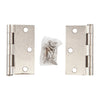
If the hinge leaf itself is visibly bent, or the barrel (i.e., the rotating centre part of the hinge) is worn, replacing the hinge entirely is a good option. New hinges are inexpensive and straightforward to swap out.
4. The Door Is Warped
Wood doors can change shape over time, particularly in rooms where moisture levels are high, such as bathrooms or laundry rooms. When this happens, the door no longer sits flat in the frame. One corner may press firmly against the door stop, which is the strip of wood the door closes against. At the same time, the latch side curves away from the frame and the latch bolt cannot reach the strike plate.
To check for this, close the door and hold a flashlight along the edge from top to bottom. If light comes through in a curve rather than a straight line, the door has changed shape. For a small amount of change, there are two options. You can adjust how far the hinges sit into the wood, or you can add a third hinge in the middle of the door to bring it back toward the frame.
For a more significant change, replacing the door slab (which is the door panel itself without the frame) is usually the more practical option. This is a situation where having pre-hung interior doors as a matched unit works in your favour, because the slab and frame are built to fit each other from the start. A replacement slab from the same product line will generally fit the existing frame without major changes.
5. The Latch Mechanism Itself Is Faulty
Sometimes the problem has nothing to do with the frame or the alignment. The latch mechanism, which is the working part inside the door handle set that controls the latch bolt, can wear out or stop working properly. Likewise, the small spring inside the housing can wear out over time. When that happens, the bolt moves slowly or stops pushing back out after it has been pressed in.
You can test this with the door open. Press the latch bolt in with your finger and let go. It should push back out quickly and firmly. If it moves slowly, stays partly pressed in, or makes a scraping sound when you press it, the mechanism needs to be replaced.
Replacing the latch assembly or the full handle set is not a difficult job. When selecting a replacement, confirm the backset measurement before buying. The backset is the distance from the edge of the door to the centre of the handle hole. This measurement needs to match your existing door so the new latch lines up correctly with the strike plate on the frame.
6. The Door Stop Moulding Is Positioned Incorrectly
The door stop is the thin strip of moulding nailed to the inside of the frame that the door presses against when it closes. If this strip is set too far into the frame, it stops the door before the latch bolt has a chance to reach the strike plate. If it is set too far out, the door closes past the latch position without making contact.
This problem is common after a door has been painted several times, because each coat of paint on the stop moulding effectively moves it slightly further into the door's path. Over many years, this buildup is enough to prevent the door from latching properly.
Start by removing the stop moulding carefully. Then close the door until the latch clicks into the strike plate fully. Nail the moulding back flush against the closed door, leaving just enough space so it does not rattle. If the moulding breaks during removal, replacement pieces are available at most building supply stores.
Connecting the Fix to the Right Door and Hardware

If the adjustments covered above have not solved the problem, the next step is to look at the door itself, the hardware, how it was installed, and who should handle the fix.
When the Latch Problem Points to a Door That Needs Replacing
Sometimes you work through every fix and the door still does not perform well. The frame is square, the hinges are tight, the strike plate is correctly positioned, and the latch mechanism is new, but the door still does not close properly. In these cases, the door slab itself may be beyond repair, whether from age, damage, or a poor original installation.
At this point, replacing the full unit makes more practical sense than continuing to work around the problem. A quality pre-hung interior door comes with the slab, frame, and hinges already assembled and matched at the factory. This removes most of the alignment work from the installation. Home Carry Supply carries a range of interior door options suited to Canadian homes, with sizing and styles to match both modern and traditional interiors.
Choosing the Right Handle Set and Latch for Your Door
A latching problem is sometimes as simple as a mismatched handle set. If the latch bolt is too short for the door thickness, the latch will never reach the strike plate properly. The same problem happens if the handle set was made for a different backset measurement than your door has.
When replacing hardware, confirm three things before buying:
-
The first is the backset measurement, which is the distance from the edge of the door to the centre of the handle hole.
-
The second is the door thickness.
-
The third is the bore hole diameter, which is the size of the round hole drilled through the door face for the handle.
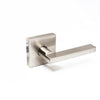
Handle sets also come in different functions. A passage set has a latch but no lock and is used for hallways and common areas. A privacy set has a latch and a simple interior lock and is used for bedrooms and bathrooms. Using the wrong function for a room will cause problems from the start.
The Value of Getting the Installation Right the First Time
Many latching problems trace back to the original installation. A door that was hung without checking that the frame sits straight and level will develop problems. This is because the weight of the door continuously works against a frame that was never properly set.
Checking the gap around the full perimeter before nailing the casing in place and making sure the frame is shimmed solidly prevents most of the problems covered in this article. Shimming means placing small wedges of wood between the frame and the rough opening to hold everything in the correct position.
If you are installing a new door, a pre-hung unit simplifies the process considerably. The frame comes pre-assembled, the hinges are already cut into the wood so they sit flush, and the door is already hung and adjusted before it leaves the factory. The main task during installation is setting the unit straight and level in the rough opening and shimming it solidly before fastening it in place. The alignment work is largely done for you before the door arrives.
A door that will not latch properly is frustrating, but it is almost always fixable. The cause is usually something mechanical and specific, whether it is a shifted strike plate, a loose hinge, seasonal wood movement, or a worn latch mechanism. Working through each possibility methodically will get you to the answer without unnecessary expense. If you reach the point where a replacement makes more sense than another repair, choosing quality pre-hung interior doors from a reliable supplier makes the process much smoother. Home Care Supply offers options that suit a wide range of Canadian homes, and getting the right door from the start is the best way to avoid this problem entirely in the future.
Frequently Asked Questions
Q1. Why does my door latch click but the door still swings open after?
The latch bolt is likely catching the edge of the strike plate rather than going fully through the opening. Moving the strike plate slightly in the right direction usually resolves this.
Q2. Can I fix a misaligned strike plate without removing it from the frame?
Yes, for small gaps you can widen the strike plate opening using a metal file. Larger misalignments generally require removing and repositioning the plate properly.
Q3. How do I know if my door frame has shifted out of square?
Check the gap around the closed door on all sides. An uneven gap (i.e., one that is wider on one side than the other) is a reliable sign the frame has moved and needs to be re-shimmed.
Q4. Why does my door latch fine in winter but not close properly in summer?
Higher summer humidity causes the wood to absorb moisture and swell. Light sanding of the binding edge and sealing the bare wood with paint will reduce the problem noticeably.
Q5. Is it better to repair an old door or replace it with a new one?
If the frame is solid and the issue is isolated to one specific cause, then repair is usually the better choice. Repeated failed repairs or widespread damage are good reasons to consider replacement.


