




Picking a new interior door feels like it should be simple, until you are actually doing it. You start with one question (what style looks good?) and before long you are second-guessing the core type, the finish, the panel count, and whether the size you measured is right. It is a much bigger decision than it appears at first.
Most people shop for doors the same way they shop for paint. They go straight to colour and finish and treat everything else as a footnote. The panel layout, meaning the number and arrangement of raised or recessed sections on the door face, gets almost no attention. That is a problem, because layout is what determines how the door reads in a room day after day.
The 2-panel door shows up in a wide range of Canadian homes, from new builds to older houses going through a full renovation. It is not a niche choice or a trendy pick. It holds its place because it works consistently across many different room types and interior styles—and that is exactly what makes it worth understanding before you buy.
In this blog, we will walk through what the 2-panel layout does to a room so you can make a choice that looks right and works well once the door is hung.
What 2-Panel Doors Really Do to the Look and Feel of a Room

Most people assume that the panel layout is only a style choice, but it is actually a practical one. Here is a point-by-point breakdown of how a 2-panel layout changes the way a room looks and functions.
1. The Horizontal Rail Creates a Natural Reference Line That Anchors the Room
Every interior door has a horizontal rail, which is the crosspiece that divides the door into its sections. On a 2-panel door, that mid-rail sits roughly in the centre or slightly below it, depending on the product. This placement matters more than most people realize. The human eye is naturally drawn to horizontal lines, and a clear reference line on a vertical surface helps the eye organize the space around it.
This effect is especially noticeable in rooms where the walls are plain or where there is not much furniture to break up the vertical surface area. The mid-rail gives the eye somewhere to land, which creates a sense of order rather than simply being a flat surface.
In rooms with lower ceilings, this can work in your favour because it gives the room a clear sense of proportion and makes walls look more structured and less empty.
2. The Two Stacked Panels Draw the Eye Upward, Making Ceiling Height Feel Taller
A door with two vertically stacked panels makes a room look taller, not shorter. Your eye naturally follows the vertical arrangement of the panels upward toward the ceiling, which makes the ceiling appear higher than it is. This effect is stronger when the door is painted in a lighter colour than the surrounding walls, because the contrast pulls your attention toward the door first and then carries it upward.
This is especially useful in rooms with low ceilings, because the vertical panel arrangement gives the wall more structure without touching anything else in the room. For instance, fitting a 2-panel door at the end of a hallway draws the eye forward and upward, making the hallway look longer and taller at the same time.
3. The Profile Adds Shadow Lines That Give Walls Depth Without Adding Visual Clutter
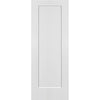
Doors with no panels at all can work well in certain settings, but in most home interiors they look like blank surfaces.
The recessed panels on a 2-panel Shaker door address this in a simple and direct way. When light hits the face of the door, whether from a window, an overhead fixture, or a lamp, the slightly recessed panels produce thin shadow lines along their edges. Those shadow lines add depth to the door face without making the room look busy or overcrowded.
The shadow lines shift as the light in the room changes throughout the day, which means the door face looks different at different times of the day rather than looking the same from morning to night. This matters most in hallways, where doors take up a large share of the visible wall area, and the walls themselves have no furniture or decoration to break them up. In a hallway with 2-panel interior doors, those shadow lines are often what makes the space look complete and well thought out.
4. The Symmetry of Two Panels Creates a Sense of Balance That Feels Calm and Resolved
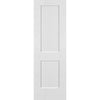
A two-panel door has two sections of equal size, one on top of the other, separated by a horizontal rail in the middle. Because both panels are the same height and width, the door looks balanced when you stand in front of it. This is useful in rooms where you want the space to look settled and put together without relying on furniture or decoration to do that work.
This balanced layout is part of why the 2-panel Shaker door holds up well across many different interior styles. It does not lean heavily toward one look or another, which means it works in a bedroom, a living room, and a home office without looking out of place in any of them.
For instance, bedrooms benefit from this particularly well because a balanced 2-panel Shaker door face does not add any unnecessary detail to a room that is meant to be calm and restful.
5. The Two-Panel Layout Works Well at Both Standard and Taller Door Heights
One practical advantage of the two-panel layout is that it works at different door heights without looking off. A standard 80-inch door with two panels looks proportionally correct because the two sections divide the door face into equal and balanced parts. The same layout also works at taller heights, such as 84-inch options, because as the door gets taller, the panels simply get longer and the door still looks proportional.
This is a practical consideration for homeowners who are renovating or building new, since door height requirements can vary from one project to the next. A 2-panel interior door slab at a taller height still looks clean and proportional. Doors with more panels can look off at taller heights because the more sections you add to a door face, the harder it becomes to keep the proportions balanced.
6. The Profile Connects Visually With Other Design Elements Already in the Room
A door does not exist on its own. It sits alongside baseboards, door casings, window trim, and the furniture visible through an open doorway.
The two-panel layout works well with these existing elements because its lines are simple and do not compete with anything around it. The horizontal rail in the middle of the door repeats the same horizontal line you already see at the top of a baseboard. The flat recessed panels sit comfortably next to flat trim profiles without looking out of place.
The 2-panel Shaker interior doors work in both traditional and contemporary homes depending on the finish and hardware you choose, which is why they suit older homes with more detailed trim as well as newer homes with clean and simple millwork. For instance, a primed white two-panel slab paired with a brushed nickel lever handle looks at home in both a farmhouse kitchen and a modern condo hallway.
How These Proportional Benefits Connect to What You Need to Buy

Knowing what a two-panel door does to a room is only useful if it helps you pick the right product for your project. Here is where that knowledge meets the actual buying decision.
Choosing Between a Slab and a Pre-Hung Unit Affects How the Door Reads in the Frame
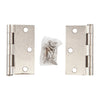
A slab door is the door panel on its own. A pre-hung unit comes with the door already attached to a frame, with hinges included. The difference between the two is not just about installation.
A 2-panel interior door slab gives you control over the reveal, which is the gap between the door edge and the frame. A tighter reveal gives the finished door a cleaner and more considered look. A pre-hung unit sets that gap for you, which is the right choice when you are replacing the frame entirely or working with a new opening.
At Home Care Supply, both configurations are available in the Shaker two-panel solid door, which means you do not have to give up the style you want to get the installation format your project needs. The pre-hung version works well for new builds and full room renovations, while the slab is the better choice when the existing frame is in good condition.
A Solid Core Door Performs Better Than a Hollow Core Door in Rooms That Need Privacy
A 2-panel door can have either a hollow core or a solid core, and that difference affects how it performs in daily use far more than most people expect. A solid-core door is heavier, closes more quietly, and blocks more sound between rooms.
For bedrooms and home offices, this matters because those are the rooms where you most need a door to act as a proper barrier between spaces. A hollow-core door is lighter and less expensive, which makes it a reasonable choice for rooms like closets or laundry rooms where sound control is not a priority. The solid core does not change the look of the door at all.
The two-panel layout looks the same whether the core is hollow or solid, which means you are getting a better-performing door without giving up anything on the outside. Home Care Supply's Shaker 2-Panel Solid Door ships pre-primed and ready for paint, so the finish colour is entirely your choice.
Matching the Door Profile to Your Trim Is the Detail That Ties Everything Together
The door does not finish a room on its own. It works alongside the door casing, the baseboard, and the door jamb, and those elements need to relate to each other for the room to look complete. One of the more common mistakes in home renovations is choosing a door without considering the trim around it. The two-panel Shaker format works alongside a wide range of casing and baseboard profiles because its lines are clean and simple. If you are renovating a room from scratch, choose the door first and then select the trim to complement it.
Home Care Supply carries casings, door jambs, and baseboards in multiple profiles. Door jambs are the vertical boards that line the inside of the door opening. The baseboards and casings are made from medium-density fibreboard (MDF), which is a smooth and paintable wood-based material. Sourcing the door and trim from one place means everything works together before anything is installed.
The choice of an interior door panel layout is rarely treated as a serious design decision, but the proportional effects it creates are real and lasting. A 2-panel door does specific, measurable things to the way a room feels: it anchors the space, guides the eye upward, adds depth without clutter, and brings a quiet symmetry that holds up across every style of Canadian home interior. It is a profile that has earned its reputation not through trend cycles but through consistent, practical performance in thousands of rooms. If you are planning a renovation and want to make a door choice that ages well and works hard in the background, Home Care Supply has the Shaker 2-panel in both slab and pre-hung formats, ready to ship across Canada.


