










DIY Installation Guides for Bathroom Vanities, Interior Doors, Faucets & Flooring
Step-by-step instructions from the Home Care Supply team to help you install with confidence
Whether you're a first-time DIYer or an experienced renovator, our installation guides walk you through every step. From mounting a bathroom vanity to hanging a pre-hung interior door, these guides cover the tools you'll need, common mistakes to avoid, and pro tips to get a professional-looking result.
Bathroom Vanity Installation
Installing a bathroom vanity is one of the most rewarding bathroom renovation projects. A new vanity instantly transforms the look of any bathroom. This guide covers freestanding, wall-mounted, and vessel sink vanities. Most homeowners with basic plumbing knowledge can complete this in 2–4 hours.
Tools & Materials Needed
Before You Start
- Standard vanity height is 32" (traditional) or 36" (comfort height). Measure the existing rough-in height before ordering.
- Check plumbing rough-in — drain centre and supply stub-out locations must align with your new vanity's cutouts.
- Water supply: Locate the hot and cold shut-off valves under the sink. If none exist, shut off the main water supply.
- Wall material: Tile or cement board may require masonry anchors. Wood studs are easiest for mounting.
Installation Steps
- Turn off the water supply at the shut-off valves under the sink. Open the faucet to drain the lines and relieve pressure.
- Disconnect supply lines from the shut-off valves and the faucet. Place a bucket under the P-trap. Loosen slip nuts and remove the P-trap, noting the configuration for reassembly.
- Disconnect and remove the old vanity, countertop, and any wall anchors. Patch drywall if needed and let it dry fully before proceeding.
- Mark wall studs with a stud finder — the vanity back rail must anchor directly into studs for a solid installation that can support the countertop weight.
- Set the new vanity in position. Check it is perfectly level front-to-back and side-to-side using a 24" level. Shim the base with plastic shims as needed — never rely on caulk to fill a gap.
- Drive 3" screws through the back rail into studs. Use at least two screws per stud location. Confirm the cabinet is still level after tightening.
- Install the faucet onto the countertop or sink before setting it on the cabinet — it is far easier to work from above. Follow the faucet manufacturer's instructions for hole configuration.
- Set or adhere the countertop per manufacturer instructions. Many drop-in sinks use silicone beads; undermount sinks require clips and silicone from below.
- Connect braided supply lines: faucet inlets to shut-off valves. Hand-tighten, then one-quarter turn with a wrench. Do not over-tighten — it crushes the ferrule inside.
- Reassemble the drain body and P-trap. Confirm the drain outlet in the wall lines up — cut the tailpiece with a hacksaw if it is too long. Tighten slip nuts by hand plus one-quarter turn.
- Apply a continuous bead of silicone caulk along all edges where the vanity meets the wall and along the perimeter of a drop-in sink. Smooth with a wet finger. Do not caulk the floor front edge — this allows leak detection.
- Restore water supply slowly. Check every connection for drips with a dry paper towel. Run hot and cold fully for two minutes and recheck.
Interior Door Installation
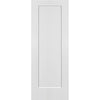
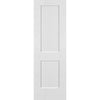
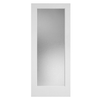
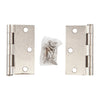
Installing an interior door is a skill-building project that dramatically changes the feel of a room. Pre-hung doors are strongly recommended for most homeowners — you get the door, frame, and hinges pre-assembled and pre-mortised, saving hours of skilled carpentry work.
Pre-Hung vs Slab Door
Pre-hung door: Door is mounted in a complete frame. Easiest option — replace old frame and all. Recommended for new openings, replacing a damaged frame, or upgrading to a solid-core door. This guide focuses on pre-hung installation.
Slab door: Door only, no frame. Requires more skill — you must fit it to an existing frame, mortise hinges to exact depth, and bore the lockset hole precisely. Best left to experienced DIYers or carpenters.
Measuring Guide
Measure the rough opening width at the top, middle, and bottom. Use the smallest measurement. The door unit size (not rough opening) is the door width plus the frame. Standard interior door widths: 24", 28", 30", 32", 36". The rough opening should be 2" wider and 2" taller than the door unit to allow for shimming and leveling.
Tools & Materials Needed
Pre-Hung Door Installation Steps
- Remove the old door by driving the hinge pins out from the bottom using a nail and hammer. Then pry off the casing trim on both sides and remove the old frame.
- Verify rough opening dimensions — width and height — against your door unit size. The rough opening should be 2" wider and 2" taller than the door unit.
- Check that the rough opening framing is plumb (vertical) and square. Use a long level on the king stud. Correct any significant lean with blocking or framing before proceeding.
- Slip the pre-hung door unit into the opening from the stop side — this is the interior side, the direction the door swings toward. Have a helper hold it steady.
- Tack one hinge-side shim pair at the top hinge location to hold the unit in place temporarily.
- Set a level on the hinge jamb. Adjust shims at the bottom until the jamb reads perfectly plumb. Check the head jamb for level as well.
- Insert shim pairs at each hinge location and at the strike plate location on the latch jamb. Shims should be snug but not bowing the jamb.
- Drive 3" screws through the hinge jamb into framing at each shimmed location. Use one screw per shim pair, positioned through the jamb directly into the jack stud.
- Close the door and check the reveal — the gap between the door slab and the jamb should be consistent (approx. 1/8") on all three sides. Adjust shims as needed.
- Test the door swing. It should open and close smoothly without binding, rubbing, or drifting open on its own. If it drifts, the hinge jamb leans slightly — re-plumb and re-shim.
- Once confirmed, drive screws or finish nails through the latch jamb and head jamb. Score and snap protruding shim tails flush with the jamb face using a utility knife or oscillating tool.
- Install the lockset per manufacturer instructions. Confirm the latch bolt aligns with the strike plate and catches cleanly. Adjust the strike plate position if needed.
- Install door casing trim on both sides to cover the gap between the frame and drywall. Miter corners at 45 degrees. Secure with finish nails into both the jamb and framing. Fill nail holes and paint.
Faucet Installation
Replacing a bathroom or kitchen faucet is one of the most accessible plumbing projects for a homeowner. Most installations take 1–2 hours, require no soldering, and only basic tools. The biggest challenge is usually accessing the mounting hardware underneath a crowded cabinet — a basin wrench makes this much easier.
Faucet Hole Configurations
Single-hole: One hole for a single-handle or vessel faucet. Center-set (3-hole, 4" spread): Two outer holes 4" apart, commonly on bathroom sinks. Widespread (3-hole, 8–16" spread): Three separate holes, handles mount independently. Check your sink holes before purchasing — deck plates can bridge extra holes but cannot add missing ones.
Tools & Materials Needed
Installation Steps
- Turn off the water supply at the shut-off valves under the sink. Open the faucet handles fully to release pressure and drain the supply lines completely.
- Place a bucket under the supply connections. Use an adjustable wrench to disconnect the supply lines from the shut-off valves and from the faucet inlets.
- Use a basin wrench to loosen the mounting nut(s) holding the old faucet to the sink from below. On older faucets, these may be corroded — apply penetrating oil and let it soak 10 minutes if needed.
- Lift out the old faucet from above. Clean the sink deck thoroughly — scrape away any old plumber's putty, silicone, or mineral buildup. A clean, flat mounting surface prevents future leaks.
- Assemble the new faucet body per manufacturer instructions. Many come partially pre-assembled. If your faucet includes a gasket, use it instead of putty. If no gasket, roll plumber's putty into a rope and press it around the base perimeter.
- Feed the supply lines and lift rod down through the sink hole(s). Set the faucet in position, aligning with the holes. Press down firmly to seat the gasket or putty.
- From below, thread on the mounting hardware (nuts, washers, or mounting plate). Hand-tighten, then snug with the basin wrench. Do not over-tighten on a porcelain or composite sink — it can crack.
- Wrap the threaded ends of supply line fittings with 2–3 layers of Teflon tape, wrapping clockwise as you look at the threads. Connect supply lines to the faucet inlets and to the shut-off valves. Hand-tighten, then one-quarter turn with a wrench.
- Install the drain assembly. Insert the drain body into the sink drain hole with plumber's putty or the included gasket. Secure the drain nut from below. Connect the pivot rod to the lift rod strap (clevis) using the spring clip — adjust the strap hole to get the correct stopper travel.
- Slowly restore water supply. Check every connection for drips with dry paper towels. Run hot and cold fully open for 2 minutes and recheck all joints.
Bathtub Installation
Bathtub installation is the most complex project in this guide. It requires carpentry, plumbing rough-in, waterproofing, and tiling skills. This overview helps you understand the scope, make informed decisions when hiring, and act as an informed owner when discussing the project with a contractor.
Key Considerations Before Starting
- Drain rough-in location: Confirm the rough-in drain centre position matches the new tub's drain outlet. Even a few centimetres off means opening the subfloor — a major scope increase.
- Structural support: Alcove tubs require a horizontal ledger board nailed to all three framing walls at the exact flange height. Freestanding tubs need a reinforced subfloor capable of supporting 400 kg+ when filled.
- Access panel: Plan for a removable access panel on the lath/drywall end of the tub for future valve servicing. This is code in many jurisdictions.
- Waterproofing: All wet areas require a continuous, unbroken waterproof membrane behind the surround material. Zero gaps at inside corners, the tub-to-wall joint, or any penetration point.
- Leveling: A tub that is not level will not drain fully, traps standing water, and creates stress cracks over time. Check level front-to-back and side-to-side before setting.
Alcove Bathtub Installation Overview
- Rough-in the drain in the correct position. Confirm the trap depth (typically 12"–15" from finished floor) matches the tub waste-and-overflow assembly.
- Install ledger boards on all three walls at the tub flange height. Use a level across all three boards — this is the critical step that determines the tub's final resting height.
- Set the tub on a full mortar bed or rigid foam support per manufacturer specification. Lower into position; the flanges should rest squarely on all three ledger boards.
- Check level front-to-back and side-to-side before the mortar sets. Adjust with shims under the tub feet if the unit has them.
- Connect the drain body and overflow plate assembly before the tub is fully weighted into place. Connect the waste-and-overflow linkage and test the stopper function.
- Nail or screw through the tub flanges into studs as specified by the manufacturer. Do not over-nail — flanges can crack on acrylic and fibreglass tubs.
- Install cement backer board in the surround area, not standard drywall. Tape all seams with alkali-resistant mesh tape and thinset mortar. Let cure 24 hours.
- Apply a liquid waterproofing membrane to the backer board. Pay critical attention to inside corners and the tub-to-wall joint. Apply two coats per product instructions.
- Install tile or a solid surround panel over the waterproofed surface using the appropriate adhesive. Allow tile adhesive to cure fully before grouting.
- Apply silicone sealant — not grout — at the tub-to-tile joint along the bottom row. This joint must stay flexible to absorb movement. Grout will crack here within months.
- Install valve trim and shower fixtures only after tile and surround work is fully complete and cured.
Flooring Installation
Floating floor installation (laminate, luxury vinyl plank, and engineered hardwood) is one of the most DIY-friendly renovation projects available. No glue, no nails, and no special skills required for most formats. A 200 sq ft room can typically be completed in a full day by two people working together.
Tools & Materials Needed
Step 1 — Subfloor Preparation
The subfloor must be clean, flat (within 3/16" over 10 feet for most products — check your manufacturer spec), dry (moisture below 3% for wood, follow spec for LVP over concrete), and structurally sound. Scrape up all adhesive residue. Drive down any protruding nails or screws flush. Self-level any low spots greater than 3/16". A bad subfloor is the number-one cause of floor failures — there are no shortcuts here.
Step 2 — Acclimation
Leave unopened flooring boxes flat in the installation room for at least 48 hours before installing — 72 hours is better for solid hardwood. Maintain room temperature between 18–27°C and normal humidity (35–65% RH). This allows the planks to adjust to the room's conditions and prevents gaps or buckling after installation.
Step 3 — Underlayment
Roll out underlayment perpendicular to the flooring direction. Butt edges together — do not overlap. Tape seams with the recommended tape. Over a concrete slab, always use a vapour barrier underlayment regardless of whether the slab "feels dry." Some luxury vinyl plank and laminate comes with pre-attached underlayment — check manufacturer instructions and do not double up, as it causes instability.
Step 4 — Layout and Direction
Run planks parallel to the longest wall or the primary light source for the best visual result. Snap a chalk line parallel to your starting wall to keep the first rows perfectly straight — this is your alignment reference for the entire floor. Stagger end joints by at least 15cm between adjacent rows, and at least 30cm from the nearest joint in the row after that. Avoid H-patterns (aligned joints in alternate rows).
Step 5 — Installing Planks
- Place 6–8mm spacers against all walls before laying the first plank. These maintain the expansion gap — critical for floating floors, which expand and contract with humidity changes.
- Start in a corner. First row, groove side facing the wall. Use full-length planks where possible for the strongest visual line.
- Click or glue planks together per manufacturer method. Always use a tapping block and mallet — never strike the locking profile directly, as it will chip and the plank will no longer click securely.
- Measure and cut planks to fit at row ends with a miter saw or jigsaw. Save cut-off pieces 30cm or longer to start the next row — this automatically creates the stagger pattern.
- For obstacles (pipes, door casings, hearths): use a jigsaw, leaving full expansion gap around all fixed objects. Undercut door casing trim with an oscillating tool so the plank slides under it cleanly.
- Continue rows, periodically checking alignment against your chalk line. Correct any drift in the next 2–3 rows before it becomes uncorrectable.
- Last row: measure and rip to width. Use a pull bar to click into place if clearance is too tight for the tapping block.
Step 6 — Finishing
Remove all spacers after the floor is fully installed. Install new baseboards or quarter-round moulding to cover the expansion gap. Nail only into the wall, never into the flooring — the floor must be free to move. Install transition strips at all doorways and where the floor meets a different floor type. Use the correct transition profile for height differences (reducer, T-mould, or end cap).
Always follow the manufacturer's specific installation instructions included with your product. These guides are general references only. Requirements vary by municipality — check local building codes and permit requirements before beginning any project.
Related Resources
Have a question before you start?
Our team is happy to help with product fit, installation questions, and local installer recommendations across the GTA and Ontario.


