




The impact of humidity and moisture is one of the most overlooked factors when Canadian homeowners choose interior doors. Most people pick a style, check the price, and move on. The room the door is going into rarely gets any thought at all.
Bathrooms and laundry rooms are not like the rest of your home. Moisture levels in these rooms are consistently higher than in the rest of your home. Door materials that are fine in a dry space can struggle in those conditions. Warping and swelling are the typical outcomes when the wrong door goes into a wet room.
Knowing which type of door holds up in humid spaces saves you from replacing the same door twice. It also saves you from the frustration of a door that sticks, gaps, or looks old before its time.
In this blog, we will discuss how solid-core interior doors hold up in high-humidity spaces like bathrooms and laundry rooms. This knowledge will help you make an informed choice for the rooms in your home that need it most.
Why Door Construction Matters More in Wet Rooms Than Anywhere Else

The difference between door types is most obvious in rooms where moisture is part of the daily routine. Here is a look at what happens inside these spaces and why the right door construction holds up better.
1. The core construction resists moisture absorption from the inside out
The key reason why solid-core interior doors hold up better than hollow-core doors in humid rooms comes down to what is inside them. A hollow-core door is built around a cardboard honeycomb frame, covered on both sides with a thin outer layer of wood material.
When steam from a shower or a running dryer fills a room repeatedly, that moisture finds its way into the door through the edges, the face, and any small gaps in that outer layer. The cardboard core soaks it up quickly, and once that happens, the door begins to lose its shape.
A solid-core door has a much denser interior made from wood fibres and resin pressed together into a solid block, which gives the door its weight and stiffness. That density slows how much moisture gets into the door considerably. The door still needs to be properly finished and sealed before installation, but the construction itself gives it a more reliable base in wet conditions. For instance, a solid-core Shaker door in a bathroom that is used daily will hold its shape far longer than a hollow-core door in the same space.
2. Warping and swelling are common problems, and a denser door handles both better
When a door absorbs moisture unevenly, which is how it almost always happens, one side swells while the other stays dry. The result is a door that bows or sits crooked in its frame. This is one of the most common problems homeowners run into with bathroom doors, and it is almost always a hollow-core issue.
The dense construction of solid-core doors distributes any absorbed moisture more evenly across the slab. Because the material is consistent throughout, there is no weak spot where moisture gathers faster than it can escape.
The added weight of the door helps it stay straight under the stress that humidity creates over time. A door that warps stops latching properly, creates gaps at the frame, and allows moist air to pass into adjacent rooms. Choosing the right door construction from the start avoids that series of problems entirely.
3. The finish and edge sealing carry as much weight as the core itself
Even the best core construction will fail prematurely if the door is not properly finished before installation. This is especially true in high-humidity rooms. The most vulnerable parts of any door are the bottom edge and the top edge, because these are the areas most often left unsealed during installation.
Moisture gets into raw or unsealed wood fibre quickly, and once it enters the edge of a door, it moves inward. Every edge of the door needs to be sealed before it goes into the frame in a bathroom or laundry room. The top, bottom, and both sides should each get at least two coats of paint or a good quality primer.
The face of the interior door needs the same treatment. Leaving out a coat to save time is a common finishing mistake that shortens the life of even a good-quality door. Using a moisture-resistant paint rather than standard wall paint is worth the small extra cost in rooms where steam is regularly present.
4. Pre-hung solid-core door units offer a key advantage in these rooms

When you install a pre-hung solid-core door, the door slab arrives already set inside a ready-built frame with hinges attached and everything lined up. This matters in humid rooms for a specific reason. The factory assembly process ensures that the gaps between the door and the frame are consistent and correctly sized from the start. A door that sits evenly in its frame with proper clearance on all sides handles moisture problems better than one that was fitted on site and left with uneven gaps.
A pre-hung unit gives you a new frame alongside a new door, which means you are not installing a quality slab into a frame that may already be slightly uneven or damaged by old moisture. In a bathroom renovation or laundry room update, starting fresh with a complete pre-hung solid-core door unit is the more practical choice. It removes the guesswork from fitting and gives the door a reliable start in a wet room.
5. Weight and closing action affect ventilation and moisture build-up
There is a practical detail about solid-core doors in humid rooms that most homeowners do not think about until they experience it. A heavier door closes more firmly and creates a better seal at the latch and frame. That seal matters because it controls how moisture moves between rooms.
A hollow-core door that hangs slightly loose or does not close flush leaves a gap that allows humid air to move into hallways, bedrooms, and closets. Over time, that causes problems well beyond the bathroom itself.
The closing weight of a solid-core door also means it is less likely to be left partly open, which is a common habit that allows steam to move into the rest of the house. A door that closes properly makes bathroom exhaust fans more effective, because the fan can pull moist air out without humid air entering through a gap at the frame.
6. Long-term durability in laundry rooms is a separate conversation worth having
Laundry rooms present a different set of conditions than bathrooms. A laundry room produces moisture at specific times rather than all day. Most of it comes from the dryer and washing machine during each cycle. Each dryer cycle pushes warm, damp air into the room. If the space does not have good ventilation, that moisture gradually works its way into the walls, flooring, and door.
Solid-core doors suit this environment well because the solid material inside them takes on moisture more slowly than the cardboard frame inside a hollow-core door.
A laundry room door takes more physical wear than a bathroom door because of how often it is used and the nature of carrying loads through the opening. The added strength of solid-core construction means the door handles everyday contact better, including bumps from laundry baskets and regular handle use.
7. Proper ventilation works alongside the right door, not instead of it
No door, regardless of how well it is built, solves a moisture problem on its own. A bathroom or laundry room that does not have a working exhaust fan will still build up moisture, even with the best door in the frame. The exhaust fan removes moisture from inside the room. The door controls how much of that moisture moves into the rest of the house. Both need to be working properly for the room to stay in good condition over time.
A solid-core door paired with a properly working exhaust fan gives you the most reliable setup for a wet room. The door holds moisture in the room long enough for the fan to do its job. Without that combination, moisture finds its way into hallways, adjacent rooms, and the surrounding wall and floor surfaces, regardless of which door you choose.
How These Principles Connect to What You Can Order Today
What makes a door work well in a bathroom or laundry room is clear. Here is how those same factors connect to the specific door options, formats, and accessories available to Canadian homeowners right now.
Shaker-style options work well in both bathrooms and laundry rooms
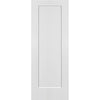
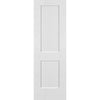
The Shaker panel is one of the most widely chosen interior door styles right now, and it suits wet rooms particularly well. The flat panel design has very few surface details where moisture can collect and sit. In a bathroom or laundry room, a 1-panel or 2-panel Shaker solid core door gives you good performance without a surface design that creates hard-to-clean areas. The flat surfaces are easy to wipe down, paint over, and keep in good condition.
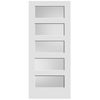
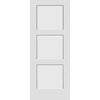
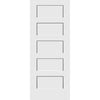
Home Care Supply carries Shaker solid-core slab doors in 1-panel, 2-panel, 3-panel, and 5-panel configurations, all ready to finish and install for a bathroom or laundry room renovation.
The pre-hung format removes the most common installation error
The single biggest installation mistake in humid rooms is setting a new slab into an old frame that has already taken on moisture damage. The frame may look fine from the outside, but if it has absorbed moisture over several years, it is already slightly soft and no longer sitting perfectly straight.
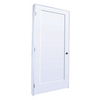
A pre-hung solid-core door unit removes that problem because it comes with a brand new frame already built around it. You are not relying on an old frame to do the job. Home Care Supply carries pre-hung solid-core Shaker doors at clear pricing. Because we ship across Canada, placing an order for a bathroom or laundry room renovation is easy regardless of your location. Starting with a completely new unit is the most reliable approach in any wet room.
Solid core doors are available without the premium price gap most homeowners expect
One of the most common reasons why homeowners choose hollow-core doors for bathrooms and laundry rooms is the assumption that solid-core costs a lot more. The price difference is real, but it is smaller than most people expect. It becomes even less significant when you factor in the likelihood of replacing a hollow-core door within a few years in a room with regular moisture exposure.
Home Care Supply carries solid-core doors across multiple panel styles and in both slab and pre-hung formats, with pricing that works for a range of renovation budgets. In a room with daily moisture exposure, choosing the right door from the start is a more practical use of your renovation budget than revisiting the same job a few years later.
Trim and hardware choices complete the moisture-resistant setup
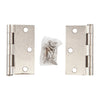
A solid-core door in a bathroom or laundry room performs best when the trim and hardware around it are treated with the same care. Door casings and jambs that are properly primed, painted, and sealed before installation block the points where moisture can get into the wall and frame around the door. Home Care Supply carries medium-density fibreboard (MDF) door casings and jambs in multiple profiles, all of which can be sealed and finished on site before installation. A door fitted into an untreated frame can still develop moisture problems over time, regardless of how well the door itself is built.
Bathrooms and laundry rooms are harder on doors than any other room in the house. Moisture is present every day, and a door that was not chosen with that in mind will show wear sooner than expected. Solid-core interior doors are a reliable choice for these spaces because the way they are built suits the conditions. The dense interior resists moisture, the flat surfaces are easy to keep clean, and the overall construction holds up well over time.


