


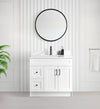
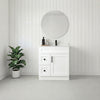
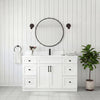
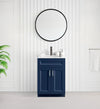


Most homeowners in Vaughan put real thought into the material and colour of their bathroom countertop. The finish, the veining, and the thickness all get careful attention. The edge profile, however, almost always gets little attention.
Edge profile refers to the shaped border cut along the front and sides of the countertop. It affects how the vanity looks in the room, how safe the surface is around water, and how much effort goes into keeping it clean on a daily basis.
Many Vaughan homeowners shopping for vanity countertops only realize after installation that the edge they chose does not quite match the style they had in mind. It is one of those decisions that feels easy to defer and is surprisingly hard to undo.
To help you make a well-informed choice before anything is cut or installed, we will discuss why edge profiles matter when choosing a vanity countertop for your home in Vaughan.
Key Takeaways
-
The edge profile on your bathroom vanity countertop shapes how the vanity looks in your bathroom every single day.
-
It affects safety, especially in bathrooms used by young children or older family members.
-
Different profiles handle water and soap splashing differently, which changes how much cleaning is involved in their maintenance.
-
Getting this detail right before fabrication begins saves you from making a costly and frustrating mistake.
-
This blog covers the most common profiles, what each one does, and how to match the right one to your space.
Edge Profiles: Why This One Bathroom Detail Deserves More of Your Attention

Here is a closer look at the most common profiles for bathroom vanity countertops in Vaughan, what each one does, and how to match the right one to your bathroom and the way it is used.
1. What an Edge Profile Actually Is and Why It Shapes the Whole Vanity
Most homeowners in Vaughan treat it as a decorative choice, something to tick off after the material, colour, and size of their countertop and vanity are settled. But it does more than that. It changes how light sits on the surface, how water behaves near the sink, how much effort goes into cleaning, and how the countertop feels when someone brushes against it.
For anyone weighing bathroom vanity countertops in Vaughan, the edge profile is often the last thing discussed at the showroom. But it is something you interact with every day at the basin, which is why it is worth thinking through carefully before you place your order.
2. The Eased Edge: The Clean, Reliable Everyday Choice
The eased edge, sometimes called the straight or flat edge, is the most commonly chosen profile in Canadian bathrooms. This edge has a small rounding at the top corner that removes the sharp edge while keeping the front face flat and straight.
This profile suits most bathroom styles because it is simple and does not draw attention to itself. The other elements in the room, such as the cabinet, the tile, and the mirror, remain the visual focus without the countertop edge getting in the way.
It is also a practical daily choice because the gentle curve at the corner helps water run off the edge rather than sitting in a groove. This is especially useful on a vanity countertop with sink cutouts, where water contact near the basin happens most frequently.
The smooth surface leaves very little room for soap or grime to collect. Because this profile requires less fabrication work than most others, it is also one of the more affordable choices.
3. The Bevelled Edge: Angled, Precise & Quietly Modern
The bevelled edge has an angled cut along the top corner of the countertop. That angle gives the edge a little more shape than the eased edge without any added decoration.
This profile works with most cabinet styles and hardware finishes because it does not stand out too much. It is a straightforward choice for bathrooms where clean lines matter and where the countertop is not meant to be the main focus.
It suits bathrooms with a long countertop running across the width of the room, because the angled cut follows that line without looking out of place. It costs slightly more than the eased edge because the fabrication involves an extra step, but the price difference is usually small.
For anyone who wants a neat finish without any added decoration, a bevelled edge is a practical option.
4. The Bullnose Edge: Soft, Safe & Built for Family Bathrooms
The bullnose edge has a full curve along the top corner of the countertop, giving it a rounded finish rather than a flat or angled one.
This profile is often chosen for shared or children's bathrooms because the fully rounded edge leaves no sharp corner around the vanity area. That means there is nothing for a child to catch when moving around the basin.
The curve is smooth and continuous along its full length, which makes it easy to wipe clean. There are no ridges or grooves to collect soap or cleaning product.
For Vaughan homeowners reviewing vanity countertops for a family bathroom, the bullnose edge is one of the more practical options. It suits traditional, transitional, and farmhouse-style bathrooms and holds up well in daily use.
5. The Ogee Edge: A Profile with Real Visual Weight
The ogee edge is the most decorative profile in common use. It has an S-shaped curve along the top of the countertop, where one section curves inward and then flows into a section that curves outward. Because it curves in two directions rather than one, it has more depth and detail than any other profile.
This profile does not suit a minimalist or contemporary bathroom because it adds a lot of detail to the countertop edge and can work against simple, straight-line cabinetry. It works better in a traditional or transitional bathroom where the rest of the room already has detailed finishes.
For instance, a deep ogee profile paired with a quartz vanity countertop in a warm white or veined finish adds more visual detail to a master bathroom. Simpler profiles do not produce the same effect.
The ogee profile costs more to fabricate and takes longer to produce than the eased or bevelled edge, which is worth knowing before you commit to it.
6. The Mitered Edge: Flat, Bold & Made for Modern Bathrooms
The mitered edge is made by joining two pieces of stone at a 45-degree angle along the front of the countertop. This means the cut end of the slab is hidden from view. What you see from the front is a continuous stone face. The countertop appears thicker and more solid than it actually is.
This profile suits contemporary and minimalist bathrooms where the countertop material is meant to stand out. When selecting vanity countertops in Vaughan for a higher-end renovation, the mitered profile gives the surface more visual weight without adding decorative detail.
Because the two pieces of stone need to match closely across the joint, the selection of material matters more here than with any other profile. Stone has natural veining, which refers to the lines and patterns running through it.
When those lines do not line up across the joint, the seam becomes noticeable. A clean match looks well put together. A poor match draws attention to the seam rather than the surface.
This profile also costs more to produce because it involves more precise cutting and fitting, which is worth factoring into your budget early.
How Edge Profiles Connect to the Products and Services Available to You

The profiles covered above each have real implications for the countertop options available locally. The four points below connect those profiles to specific product types, sizing, and material considerations worth knowing before you visit a showroom.
Choosing the Right Profile for a Larger Vanity Top
With a larger countertop, the edge profile becomes more noticeable because there is simply more of it running across the front of the vanity. On a standard 30-inch vanity, the edge is present but easy to overlook. On a 60-inch vanity countertop, the profile runs across a much wider surface and becomes a more visible part of the room.
A mitered or ogee edge can suit a larger countertop well because those profiles have enough surface area to show clearly across the wider front. A simpler choice like the eased edge keeps the countertop looking proportionate against a large cabinet base.
Double sink configurations at this width include two basin cutouts. If you are still deciding between a single-sink and double-sink vanity, that choice will also affect how the edge runs across the front of the countertop. Choosing a profile that looks clean and consistent across that wider surface is worth discussing with your supplier well before fabrication begins.
How the Vanity Base Style Affects Your Choice of Profile
The style of vanity base you choose affects which edge profiles make the most sense on the countertop above it. A wall-mounted vanity has an open look because the floor space beneath it is visible. Pairing that base with a heavy ornamental edge like a deep ogee can make the countertop look out of place above the cabinet.
A simpler profile like the eased or bevelled edge suits a floating vanity better because it keeps the overall look consistent. Freestanding vanities with traditional cabinetry look more solid and can support a more detailed edge profile without the countertop looking out of place.
For Vaughan homeowners comparing vanity countertops across wall-mounted and freestanding options, understanding how the base style affects the profile choice is a useful step before buying. Many showrooms carry both base styles, so you can compare the two side by side.
How Your Countertop Material Affects Which Edge Profiles Are Available
The material of your countertop affects which edge profiles are available and how well they hold up in daily use. Quartz is dense and consistent throughout. This makes it easier to cut into more detailed profiles without chipping along the edge.
Porcelain slabs are thinner and harder than quartz. They best suit simpler options like the eased or mitered edge because those profiles involve a straight cut rather than one that curves back on itself.
For anyone choosing a countertop vanity for a busy family home, knowing how your chosen material responds to edge fabrication before ordering is a practical step that avoids surprises. Both quartz and porcelain vanity tops are available at our Vaughan showrooms. Each comes with profile options suited to its own properties.
It is always worth asking whether the profile you want is available in your chosen material.
The edge profile you choose affects how your bathroom looks and how safe the surface is for the people using it. It also determines how much effort goes into keeping it clean. It is worth taking time to get this right before fabrication begins, because changing it afterwards is not straightforward. Think about who uses the bathroom most, what cabinet style you have chosen, and how much cleaning you can manage. Those three factors will help narrow down the right profile for your space. For anyone still working through their options for vanity countertops, the team at Home Care Supply in Vaughan can help you settle on the right choice.
FAQ
Q1: What is the most common edge profile used on bathroom vanity countertops?
The eased edge is the most common profile for bathroom vanity countertops. It is simple, suits most bathroom styles, and costs less to produce than others.
Q2: Does the edge profile affect how easy the countertop is to clean?
Yes. Profiles with smooth surfaces like the eased or bevelled edge are easier to wipe down. Decorative profiles like the ogee have ridges where water and soap can collect if not cleaned regularly.
Q3: Is the mitered edge a good choice for a quartz countertop?
Quartz works well with the mitered edge because it is dense and consistent throughout. That makes it less likely to chip where the two pieces of stone meet at the joint.
Q4: Which edge profile works best for a family bathroom with young children?
The bullnose profile is a practical choice for a family bathroom. Its fully rounded curve means there are no sharp corners around the vanity area, which lowers the risk of injury.
Q5: How do I know which edge profile will look right in my bathroom?
Start with your cabinet style. A simple straight-line cabinet suits an eased or bevelled edge. A cabinet with more detailed finishes can work with the ogee. When unsure, choose a simpler profile.


