


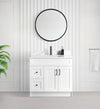
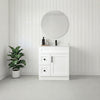
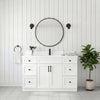
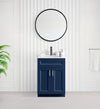



Choosing between a single sink and a double sink is one of those decisions that feels simple but carries real weight once you are standing in your bathroom with a measuring tape. Get this decision right, and your bathroom works better every single day. Get it wrong, and you are left with either wasted space or a vanity that simply does not work the way your household needs it to.
This decision has clear answers once you understand a few practical factors. It is not about which option photographs well on a product page or catches your eye in a showroom. It is about how your household lives, how your bathroom is laid out, and what your renovation budget honestly allows.
This question comes up often during a bathroom renovation, and the answer usually comes down to three things:
-
The size of your bathroom
-
The number of people using the space daily
-
The quality of the cabinet itself
A well-built vanity in either a single- or double-sink setup will hold up far longer than a poorly built one, regardless of which configuration it is.
In this blog, we discuss how to decide between a single sink and a double sink before buying a bathroom vanity in the Toronto area. This will help you make an informed choice before you spend a single dollar.
7 Things to Work Through Before You Choose a Sink

Whether your bathroom is a compact ensuite or a full master bath, these seven points give you a clear, practical way to work through the decision before you spend anything.
1. Start With Your Actual Floor Space, Not the Space You Wish You Had
The important factor in this decision is the width of your bathroom wall. A double-sink vanity typically starts at 60 inches wide and goes up from there. A single-sink vanity works well anywhere from 24 inches to 48 inches, with the 36-inch and 42-inch sizes being common choices for main bathrooms.
Before you look at a single product online or walk into any showroom, measure the wall where the vanity will sit. Write that number down. Measure the distance from that wall to the opposite wall, and check whether any door opens into that bathroom space and reduces the usable width.
A double-sink vanity that fits well in a generous bathroom will feel cramped in one that is too narrow for it. The measurement is the starting point for everything else, and the room can only hold what it can hold.
2. Be Honest About How Many People Actually Share the Bathroom
A bathroom that is used by multiple family members throughout the morning, whether it is a main family bathroom or a master ensuite in a large household, will benefit from having two sink areas available.
Each person gets their own dedicated space for their toiletries, their toothbrush, and their daily routine without working around anyone else. Furthermore, a growing family, where the bathroom sees back-to-back use from different people at different times of day, gets real value from that second basin.
A powder room, a guest bathroom, or a bathroom that serves only one person, however, has no practical need for two sinks. Buying a double-sink configuration in that situation means paying more for the cabinet, more for plumbing work, and more for a larger countertop, all for a second basin that rarely gets used.
The honest questions to ask yourself are how many people rely on this particular bathroom every single day and whether the current single-sink setup is genuinely causing a problem.
3. Understand What the Extra Sink Actually Costs Beyond the Vanity Price
When homeowners search online by browsing ‘vanity near me’ and compare single versus double options, they often look only at the price of the cabinet itself. That comparison misses a good portion of the real cost. A double-sink vanity requires a second faucet, a second drain assembly, and additional plumbing work to run a second supply line and drain.
If your bathroom has water supply and drain pipes set up for a single sink, moving to a double sink means your plumber needs to run an additional water supply line and may need to reposition the drain opening in the wall or floor to match the new vanity layout.
That additional plumbing work comes at a cost that varies depending on your bathroom layout, and it is a number worth getting a quote on before you settle on a double-sink configuration.
A single-sink vanity, by contrast, typically connects to the existing pipes with far less additional work involved, which makes the overall project cost easier to plan around.
4. Think About Storage, Not Just Sink Count
One thing that surprises many buyers is how much storage they give up when they move from a single sink to a double-sink configuration. A single sink vanity at 42 or 48 inches gives you a generous cabinet on one side of the basin and often a drawer stack on the other. That layout provides excellent storage for two people even though there is only one sink.
A double-sink vanity at 60 or 72 inches splits the cabinet space between two basins. Each person gets a smaller storage zone than they would have with a well-designed single-sink unit.
For instance, a well-built 48-inch single sink cabinet with deep drawers will often give you more practical day-to-day storage than a 60-inch double sink unit. Before deciding that two sinks mean better function, think about where the toiletries, towels, and everyday items will go once the bathroom vanity is installed.
5. Consider the Visual Weight of Each Option in Your Space
A double-sink vanity takes up a considerable amount of wall space. If your bathroom is wide enough to support it, that works well. In a bathroom that is too narrow for it, the vanity will dominate the room and make the space feel smaller than it is, regardless of the finish or style.
A single-sink vanity, when sized correctly for the room, leaves wall space available for a linen cabinet, a vanity tower, or simply open space that keeps the room feeling open. In a bathroom where a window sits on the vanity wall, a single-sink unit is often the more practical choice because a double-sink vanity may block the window or sit awkwardly around it.
The proportions of the room matter as much as the function of the vanity, and getting both right makes a real difference to how the finished bathroom feels. Many Toronto-area homeowners searching for the best quality of vanity they can afford realize that the right size for their specific room matters far more than any style or finish.
6. Factor in the Quality of the Cabinet Construction
Whether you choose a single or double sink, the material and build quality of the cabinet determines how long it holds up. A bathroom deals with moisture and humidity every day, and cabinets built with solid wood frames and moisture-resistant finishes handle that environment far better than those built with lower-grade materials that can swell or warp over time.
When googling ‘vanity near me’ online, look at how the cabinet corners are joined, whether the drawer boxes are dovetail-joined or simply stapled together, and whether the interior shelving is finished and adjustable.
Many Canadian shoppers rely on a wood vanity that is built to handle the humidity and temperature changes that come with winter months. These construction details apply equally to single and double sink units, and they are worth checking before you commit to any purchase.
7. Plan for the Countertop and Faucet Configuration at the Same Time
Your countertop and faucet choices are inseparable from the sink count decision. A single-sink vanity gives you more countertop surface on either side of the basin, which is genuinely useful for day-to-day items. A double-sink vanity divides that surface into two separate zones, with the basin sitting in the middle of each.
Quartz is the most practical countertop material for Canadian bathrooms because it resists moisture, does not require sealing, and holds up well to daily use. When you are choosing faucets for a double-sink configuration, you are selecting two of everything, which means the finish, the handle style, and the spout height (i.e., how tall the faucet neck sits above the counter) need to be matched consistently across both basins.
That coordination adds time and cost to the selection process. Planning the countertop and faucet choice alongside the vanity decision, rather than after it, saves significant back-and-forth during the renovation.
What a Good Local Source Changes About This Decision

Typing ‘vanity near me’ into a search bar brings up a long list of options, and knowing what to look for in a retailer makes that list much easier to work through. A retailer who carries a wide range of sizes, styles, and finishes gives you real choices rather than forcing you to settle. Here is what that looks like in practice.
Seeing the Size in Person Changes Everything
Whether you browse online or visit a showroom, having access to detailed, accurate product information is what makes this decision easier. A well-presented online listing with clear measurements, multiple photos, and full specifications gives you everything you need to compare options from home. A showroom visit gives you the chance to see the scale of the piece, check the drawer depth, and assess how the cabinet feels in person.
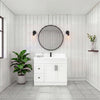
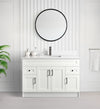
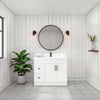
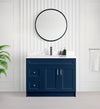
Both options have genuine value, and the right choice depends entirely on how you prefer to shop. For instance, if you are considering a 48-inch white bathroom vanity in Shaker style, a good retailer will give you enough detail through either channel to make a confident decision. That means thorough online product pages with clear measurements and photos, as well as the option to see the piece in person at a showroom if that is your preferred way to shop.
A Variety of Widths Means You Are Not Forced to Compromise
The best outcome in any vanity purchase is finding the right width for your bathroom, not settling for the closest available option. A retailer that carries vanities from 24 inches all the way to 72 inches and beyond gives you genuine flexibility. For instance, if your bathroom sits comfortably between a standard single and a double, a 48-inch single sink unit or a 54-inch model might be exactly the right fit, and you should be able to find it without compromise.
The option to shop by size, by mount type, by finish colour, and by style, all in one place, saves you from visiting multiple suppliers and trying to cross-reference specifications across different websites.
Deciding between a single sink and a double sink comes down to honest answers about your bathroom’s size, your household's daily needs, your existing plumbing setup, and your overall budget. Neither option is better than the other in every situation. Both work well when matched correctly to the space and the people using it. The right bathroom vanity for your Toronto-area home is the one that fits your wall, suits your household, and is built well enough to hold up. Home Care Supply carries a wide range of sizes, styles, and finishes when it comes to bathroom vanities, with two Ontario showrooms and Canada-wide delivery, so finding the right fit becomes a much simpler process.


