




The doors inside your home affect how the whole space looks and feels. Every time someone moves from one room to the next, the doors they pass are either working with the rest of the finishes or against them. Many homeowners spend a great deal of time choosing paint colours and flooring, then rush through the door selection at the end of a renovation. That is where a lot of disappointment comes from.
Getting this right does not take a background in design. It comes down to a few practical rules about how materials, colours, and finishes work alongside each other in the same space. When those rules are followed, each room looks like it was planned as a whole rather than put together piece by piece at different times.
The good news is that matching wood interior doors to the rest of your finishes follows a clear and learnable process. It is not guesswork. There are real, practical patterns that make the decision much easier than it appears at first.
In this blog, we will cover how to match wood interior doors to your flooring, trim, and hardware finishes so you can make well-informed choices across every room in your home.
6 Practical Rules for Getting Your Door Finishes Right

Matching your doors to the other finishes in your home does not mean making everything look the same. It means making practical choices about how materials, colours, and finishes work alongside each other in the same space. The points below walk through how to do that clearly, covering flooring, trim, and hardware in turn.
1. Start With Your Flooring Tone, Not Your Wall Colour
Most people begin their door selection by holding a paint chip up to the wall. But that is not the most reliable starting point.
Your flooring covers a very large surface area in any room, which means it has more influence over the overall colour direction than the walls. When you are choosing wood interior doors, the first practical question to ask is whether your flooring reads as warm or cool in tone. Warm-toned floors, such as golden oak, honey maple, or brown walnut, tend to work well with doors in a similarly warm range, whether that is a natural wood finish or a white with warm undertones. Cool-toned floors, such as grey-washed engineered hardwood or pale ash, generally work better alongside a crisper, cooler white on the door.
When your door tone and your floor tone sit within the same warm or cool range, the two surfaces work alongside each other without any visible clash. Starting with this check is the most practical way to avoid the most common door and floor mismatch that homeowners run into.
2. Understand the Role of Undertones in Primed White Doors
White is not a single colour. It comes in many different shades, and the wrong white will sit visibly off against the finishes already in your home. Primed white doors are a popular and practical choice, but they come in slightly different undertones depending on the product. Some lean toward yellow, some toward grey, and some toward a faint pink. This matters because undertones become noticeable when two whites are placed directly alongside each other in the same space.
For instance, if your existing trim has a warm cream undertone and your door has a cool grey-white base, the difference will show up clearly in everyday light. Before settling on any primed door finish, bring a sample of your current trim into the space and hold the two together in natural daylight. Doing this quick check takes very little time and can save you from having to repaint later. Many homeowners are caught off guard by how much variation exists between products that are all labelled simply as white.
3. Match Your Door Style to Your Home's Architectural Character
Every home has a visual character that comes from the period it was built in or the design direction the renovation is following. A home with raised-panel millwork, detailed baseboards, and traditional hardware points clearly points toward a more detailed door profile. A home with flat trim profiles, minimal moulding, and large-format tile points just as clearly in the opposite direction.
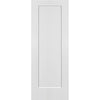
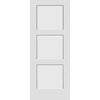
Shaker interior doors have a simple recessed panel and clean straight lines. That plain profile makes them a practical option across both modern and transitional spaces because they sit alongside a wide range of other finishes without pulling attention away from them. Nor do they create a visual mismatch the way a heavily detailed door style might in a contemporary setting.
When your interior door style matches your home's existing architectural character, it looks like part of the overall finish plan rather than something added separately. Getting this right gives the finished renovation a consistent look that carries through every room.
4. Coordinate Door Finish With Flooring Species and Grain
When your floor is a natural wood species, such as oak, maple, hickory, or walnut, the door finish decision comes down to contrast rather than direct matching. Choosing a door finish that is the exact same species and tone as your floor is generally not the strongest approach because it tends to flatten the room visually and make the surfaces blur into each other. What works better is selecting a door finish that sits in the same general colour range as the floor but at a clearly different lightness level.
For instance, a medium-toned natural oak floor pairs well with a door in a lighter natural finish, or with a clean primed white that allows the floor to remain the more prominent surface in the room. Natural wood finish doors in a lighter honey or pale tone also work well alongside medium and dark hardwood floors because they provide contrast without creating a visible mismatch between surfaces.
If your floors are on the darker end of the tonal range, a lighter door finish is generally the more practical choice because it stops the room from feeling closed in or visually heavy.
5. Use Your Trim as the Bridge Between Floors and Doors
Trim is the element that connects the floor to the door, and it is one of the most important factors in the overall coordination decision. Your door casings, which are the framing pieces that surround each door opening, and your baseboards sit right at the point where your floor and your door meet visually.
When your door colour, your casing colour, and your baseboard colour all read as the same finish, the room feels cohesive from the floor to the ceiling. The most practical approach for most homes is to keep the doors and trim in the same finish family. If your trim is a painted colonial or step profile in white, your doors should also be white or very close to it in tone. This is a widely used approach in Canadian homes and produces a reliable, clean result across a wide range of flooring types.
Solid core doors in a primed white finish work particularly well alongside painted medium-density fibreboard (MDF) trim. This is because both surfaces accept paint in the same way and hold up at a similar rate over time.
6. Match Hardware Finishes to Each Other, Not Just to the Door
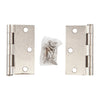
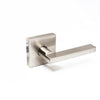
Door hinges, lever handles, and other visible door hardware need to be part of the coordination plan from the beginning, not added as a final step. A common problem is choosing a door carefully and then selecting hardware without the same level of attention. What happens as a result is that mismatched hardware finishes, such as brushed nickel hinges paired with a matte black lever handle, create a low-level visual inconsistency that accumulates across an entire home.
The practical rule is to choose one metal finish family and apply it consistently to all hardware within the same floor or zone of the home. For instance, if brushed nickel is being used throughout a bathroom and bedroom area, the door hinges in that zone should also be brushed nickel. Pairing warm metal tones like brushed gold with cooler tones like chrome or brushed nickel within the same room will almost always read as unplanned rather than intentional.
When hardware finishes are consistent throughout a space, the doors integrate into the room quietly, and the overall finish feels complete.
Applying These Principles Using the Right Door Products

Once you have a clear picture of how your flooring tone, trim colour, and hardware finish work together, the next step is choosing the right door product to bring all of that into place.
Choosing Between Solid Core and Hollow Core for Your Finish Plan
The way a door is built affects how it takes paint and holds up over time, and both of those things matter when you are planning a coordinated finish across your home.
Solid-core doors have a denser internal construction, which makes them more resistant to denting and less likely to warp over time. That durability means the painted finish on a solid core door stays cleaner and more consistent longer, which is worth considering in higher-traffic areas like hallways and main living spaces.
Hollow-core doors are a lighter option that still accepts paint and primer well. This makes them a practical choice for lower-traffic areas such as closets or secondary bedrooms where the finish still needs to coordinate, but the wear demands are lower.
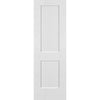
Both door types are available in primed finishes, which means you can paint them to match your existing trim precisely once they are installed. Home Care Supply carries solid-core and hollow-core options across a range of Shaker and panel profiles, all available in primed white finishes that give you full control over the final colour.
Pre-Hung Doors Make Colour Consistency Much Easier
When you replace a door slab without replacing the surrounding frame, there is a good chance the new door and the existing frame will not match in colour, even if both are white. Frames age and yellow over time, and a fresh door slab will read as noticeably brighter against an older frame.
Pre-hung doors come as a complete unit, meaning the door, the door jamb, and the doorstop are all new and consistent with each other from the start. This is particularly useful when you are replacing several doors across a home at the same time, because every opening gets the same fresh, consistent base for paint or finish.
Starting with a matched unit also makes it easier to coordinate with your trim, since you are working with one uniform surface rather than trying to blend a new door into an older frame.
Home Care Supply's pre-hung door options are available in both solid-core and hollow-core configurations, so you can choose the right construction for each area of the home while keeping the finish consistent throughout.
Glass Panel Doors as a Practical Option for Low-Light Areas
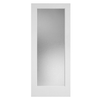
Glass panel doors, including frosted and clear glass options, serve a specific and practical purpose in spaces where moving light between rooms is part of the plan. A frosted glass door allows natural light to pass from a brighter room into a darker hallway or adjacent space while still keeping the two areas visually separate. This is a useful option in areas where a solid door would create a noticeably dim pocket that is difficult to address with artificial lighting alone.
From a finish coordination standpoint, glass panel doors are relatively straightforward to work with because the glass itself does not carry a colour that competes with your floor or wall finishes. The door frame and surrounding casing still need to coordinate with your trim, but that is the same requirement as any other door in the home.
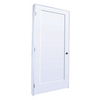
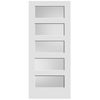
Home Care Supply carries frosted glass options in both one-panel and five-panel configurations, which makes it easier to find a glass door profile that fits both the light needs and overall finish direction of the space.
Matching wood interior doors to your flooring, trim, and hardware does not have to be a complicated process. When your door tone works alongside your floor tone, your trim ties the two together at each opening, and your hardware stays consistent in finish throughout the home, each room looks like it was planned as a whole. These are practical, everyday decisions that affect how your home looks and functions long after the renovation is done. Home Care Supply carries a wide selection of interior doors, trim, hardware, and accessories so you can work through the full coordination in one place, from the door slab to the hinge finish.
Frequently Asked Questions
Q1. Should my interior doors match my hardwood floors exactly?
No. Matching exactly often creates a flat, monotone look. Choose a door finish in the same warmth family as your floor, but at a noticeably different value or tone for better visual balance.
Q2. Can I use white doors with dark wood floors?
Yes, and it is one of the most common and reliable combinations. White doors create contrast against dark floors, and that contrast keeps rooms feeling open, airy, and well-defined without visual competition.
Q3. What is the easiest way to coordinate door hinges with other hardware?
Choose one metal finish, such as brushed nickel or matte black, and apply it consistently to every hinge, lever, and visible fitting throughout the same floor. Consistency is more important than the specific finish you choose.
Q4. Do hollow core doors take paint the same way solid core doors do?
Both accept paint well when properly primed. Solid core doors are denser and more durable over time, but hollow core doors in lower-traffic rooms will hold a finish reliably when prepared and painted correctly.
Q5. How do I match a new door to trim that is already painted and aged?
Bring a small cutting or a painted sample of your existing trim to the store. Hold it against door samples in natural light. Primed doors give you the most flexibility because you can paint them to match precisely once installed.


