


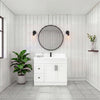
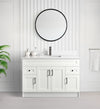
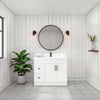
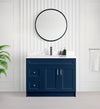
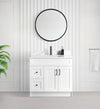
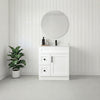
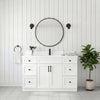
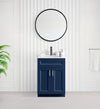



Most Toronto-area homeowners do not plan a bathroom renovation the way they plan a kitchen one. The bathroom gets attention when something breaks, when a guest mentions a water stain, or when you stand in front of the mirror one morning and realize the space around you needs a change.
That realization is more useful than you might think. It is telling you something real about your home's condition and your own standards for living in it.
The vanity is an important part of your bathroom. It handles exposure to water and humidity every day, and physical use that no other cabinet has to deal with. Knowing when to replace it is not about keeping up with trends. It is about recognizing when the current one has stopped doing its job well enough to justify keeping it.
Homeowners across the Greater Toronto Area are choosing to be more deliberate about their choice of bathroom vanity. They are thinking about quality, value, storage, and longevity before they buy.
This blog walks you through five clear signs that your bathroom vanity is ready to be replaced and what to keep in mind when looking for the right one.
Clear Signs That Tell You It’s Time for a New Bathroom Vanity

The signs that you need a new bathroom vanity are usually there before we are ready to act on them. Here are five of the most common and most telling ones.
1. Your Cabinet Doors No Longer Close Properly
When a vanity cabinet starts to warp, swell, or pull away from its hinges, the cabinet construction itself has reached the end of its useful life. This happens most often with vanities built from low-grade particleboard, which is a wood composite made from compressed sawdust and resin that has absorbed moisture over many years. The doors sit crooked, the hinges feel loose, and no amount of adjustment brings them back into true alignment.
Once particleboard begins to break down at the joints, the surrounding panels follow the same pattern. For instance, a drawer that sticks in winter and falls out of its track in summer is a cabinet-body problem, not a hardware one, and replacing the hardware will not solve it.
A vanity built with a solid wood frame or a quality MDF core, which is a denser and more stable wood composite than particleboard, holds its shape through humidity changes far better than lower-grade cabinet materials. When the doors and drawers of your current vanity have stopped working reliably, the cabinet itself needs to be replaced, not repaired.
2. You See Visible Water Damage Around the Sink Area
Discolouration, soft spots, swelling around the sink basin, or a countertop that no longer sits flat are signs that water has been getting somewhere it should not for a long time.
Visible water damage around the sink area means the damage underneath is worse than what you can see. The cabinet top, the plywood sub-base, and sometimes even the wall behind the vanity can develop mould or rot over time.
A damaged countertop surface affects daily use in practical ways, because grooves and chips collect bacteria and are difficult to clean thoroughly. For instance, a hairline crack in a laminate countertop that sits around a sink will allow water to seep through with every use. This speeds up the deterioration of the cabinet underneath. When the surface around your sink has reached that point, replacing the vanity is the more practical next step.
A quartz countertop vanity handles moisture exposure better than an older laminate or cultured marble surface, which tends to chip, crack, and stain in ways that cannot be repaired cleanly.
3. Your Storage Has Not Kept Up With Your Household
A bathroom vanity that worked well for one person or a newly built home often becomes inadequate as a household grows or changes. When the cabinet underneath can no longer hold everything your household needs, products end up on the counter, on the floor, or on the back of the toilet.
That is a clear sign the vanity has stopped doing its job. Modern vanity designs now offer storage layouts that older units simply do not have. These include drawer organizers, full-extension soft-close drawers, and tall vanity column towers that make better use of the available space.
Poor storage makes a bathroom harder to keep tidy on a daily basis, because when nothing has a clear place, surfaces fill up quickly. Counter clutter in a small bathroom makes the whole room feel harder to use. For instance, a wider vanity with multiple full-extension drawers in the same wall footprint as an older single-shelf cabinet gives you significantly more usable storage in an organized layout.
When your current vanity cannot hold what your household needs, a replacement with better interior storage is a straightforward and practical fix.
4. Your Style Has Changed, and the Vanity Has Not
When the rest of your bathroom has been updated, but the vanity has not, the mismatch becomes the first thing you notice when you walk into the room. When your floors, your tile, your fixtures, and your mirror no longer match the era of your vanity, the whole room looks unfinished. Updating the vanity to match the rest of the bathroom is a reasonable and practical decision.
Style consistency matters beyond personal preference, because bathrooms are one of the rooms potential buyers in the Toronto area look at closely during a home showing. Vanities today are available across a wide range of styles, including modern, transitional, farmhouse, and natural wood finishes. This means that finding one that suits your existing bathroom is manageable.
For instance, a wall-mount floating vanity with a natural oak finish works well in a smaller bathroom because it keeps the floor visible, which makes the room feel more open.
5. Cleaning It Has Become a Chore You Avoid
When a vanity finish traps grime, when countertop grout lines never look clean, or when hardware has corroded beyond what polishing can fix, the problem is with the materials and design. It is not a matter of how often you clean.
A vanity that is difficult to clean will be cleaned less often, which affects the overall hygiene of the bathroom. Furthermore, older vanity designs tend to have more gaps, ledges, and hardware crevices where dust and moisture collect and are difficult to reach with a cloth.
Modern vanity designs address this problem directly with full-overlay cabinet doors, soft-close hardware, and undermount sinks that sit below the countertop surface rather than on top of it.
A quartz countertop paired with an undermount sink gives you a flat, uninterrupted surface around the basin that can be wiped down in a single motion. For instance, there is no rim to clean around, which makes the daily maintenance of the sink area more straightforward than with older countertop and basin configurations.
What to Look for When You Are Ready to Buy a New Vanity

Once you have decided to replace your bathroom vanity, a few practical details are worth getting clear before you start shopping at Toronto-area showrooms. Getting these right early saves you from buying something that does not fit your space or your daily needs.
Size Range and Configuration Options Protect You From Costly Mistakes
Choosing a vanity based on how it looks in a photo before confirming whether it fits your space is a common problem. Your available wall width, where your water supply lines sit, and your door swing clearance all need to be measured before you look at any product.
The configuration you choose, whether that is a single-sink vanity, a double-sink vanity, or a wall-mount floating unit, has to match both your plumbing layout and your daily household use. A supplier with a wide size range makes this process more manageable.
Home Care Supply carries vanities from 24 inches wide all the way up to 70 inches and beyond, organized by size category. For instance, a powder room with 28 inches of wall space has completely different needs than a master ensuite with room for a double sink. Having that range available in one place means you are only looking at options that are relevant to your bathroom dimensions.
Cabinet Construction Tells You More Than the Price Tag Does
The finish on a vanity is what you see when you shop. The cabinet construction is what determines how well it holds up over years of daily use in a humid bathroom environment. A solid wood frame holds its shape through Ontario's seasonal humidity changes in a way that particleboard cannot. A plywood box resists moisture absorption at the joints, which is where cabinet bodies often begin to deteriorate first. When you are shopping, ask specifically what the cabinet box is made from, not just the door face or the drawer front, because those are two different things.
The quality of the drawer slides and hinge hardware matters alongside the box itself, because hardware that wears out quickly adds to the overall cost of ownership.
Home Care Supply carries vanities with solid wood construction, including the Bridgeport and Tesoro lines. For instance, a Tesoro Shaker vanity with a solid wood frame gives you a cabinet that is built to resist the swelling and warping that affects lower-grade cabinet materials over time.
Countertop Material Directly Affects Daily Cleaning and Long-Term Durability
The countertop surface on your vanity handles water, personal care products, and cleaning products on a daily basis. A quartz countertop handles that kind of regular exposure without requiring sealants and without staining the way laminate or cultured marble surfaces can after extended use. An undermount sink paired with a quartz top removes the rim that collects grime around a drop-in basin, which makes the sink area easier to wipe down.
Quartz is a non-porous material, which means liquids sit on the surface rather than absorbing into it. This makes cleanup more straightforward than with surfaces that require periodic sealing.
Home Care Supply's vanity collection includes quartz countertop options paired with undermount sinks, so the countertop and basin arrive as a matched unit. For instance, many of our Tesoro and Bridgeport vanities come with the quartz top already included, which removes the need to source and size a countertop separately.
Recognizing the right moment to upgrade the bathroom vanity in your Toronto area home comes down to being honest about what the space is currently delivering and what it is costing you to keep it as is. Whether the trigger is water damage, a style that no longer fits, storage that has run out, or a renovation already underway, the signs are usually clear once you know what to look for. A new vanity is one of the most practical, high-use improvements a homeowner can make. Home Care Supply carries the products, the sizing range, and the in-store guidance to help you get it right the first time.
Frequently Asked Questions
How do I know if my bathroom vanity needs to be replaced or just repaired?
If the cabinet box is warping, swelling, or pulling apart at the joints, a repair will not hold. Hardware like hinges and drawer slides can be replaced, but once the cabinet material breaks down from moisture, the entire unit needs to be replaced.
What size vanity do I need for my bathroom?
Measure your available wall width, door swing clearance, and the position of your water supply lines before you shop. Vanities are available from 24 inches for smaller powder rooms up to 70 inches and beyond for larger master bathrooms.
Is a quartz countertop worth the additional cost over laminate?
Quartz is non-porous, meaning liquids sit on the surface rather than absorbing into it. It resists staining from most household products and does not require periodic sealing, making it a practical and durable choice for a surface that handles daily water exposure.
What is the difference between a freestanding and a wall-mount vanity?
A freestanding vanity sits on the floor. A wall-mount vanity is fixed directly to the wall with no floor contact. Wall-mount vanities keep the floor visible beneath the unit, which can make a smaller bathroom feel more open and easier to clean.
Can I replace my vanity without doing a full bathroom renovation?
Yes. Replacing a vanity is a contained project that does not require updating the rest of the bathroom. A plumber and carpenter can remove the old unit and install a new one without affecting surrounding tile, flooring, or existing fixtures.


