


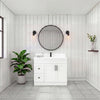
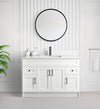
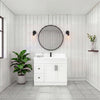
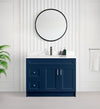
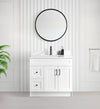
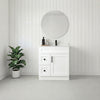
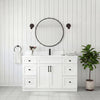
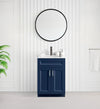


Most Vaughan-area homeowners put the largest portion of their renovation budget toward their kitchen or living room. The master bathroom often gets what is left over, even though both adults use it multiple times a day.
The vanity in your master bath gets opened, wiped down, and leaned against far more than one in a guest bath or powder room. That difference in daily use is what makes the quality of the cabinet material so important here.
Low-priced materials can hold up fine in lighter-use bathrooms. But in the master bath, they tend to show wear at the finish, the drawer edges, and the slides within a few years of regular use.
Choosing a solid wood vanity for the master bathroom in your Vaughan home is one of the more practical decisions you can make with your renovation budget. In this blog, we will discuss why the master bathroom vanity is the one place worth spending more on to help you make a confident, lasting choice.
Key Takeaway
-
Your master bathroom vanity gets more daily contact than most other pieces of furniture in your home, which is why your choice of cabinet material matters more here than anywhere else.
-
Solid wood holds up to heavy daily use longer than most other cabinet materials and can be refinished rather than replaced when it shows wear.
-
A well-built cabinet costs more upfront but tends to need fewer replacements over the years, and that is where the investment’s value shows up.
Why Your Master Bathroom Vanity Is Worth the Extra Investment

Here is what makes your master bathroom different from every other room in your renovation, and why the vanity is where that difference matters most.
1. The Master Bath Sees More Daily Use Than Most Other Rooms
The master bathroom gets more daily use than most other rooms in your house. A couple going through their morning and evening routines open the vanity multiple times a day, wipes it down regularly, and splashes it at least a few times each day. Then there is the weekend cleaning time and checking under the sink for items stored there.
A guest bath might see regular use a few times a week. A powder room handles shorter, lighter contact. The master bath’s higher level of daily use puts real pressure on cabinet materials. For instance, soft-close drawer slides that work smoothly on installation day will wear down faster in a high-traffic room like this one than in a lighter-use one.
The cabinet finish also takes repeated hits from moisture, toothpaste, hand soap, and cleaning sprays on a regular basis. Over time, that exposure dulls the finish and breaks down the surface coating in a way that simply does not happen in a guest bath or powder room.
2. Solid Wood Outlasts Cheaper Cabinet Materials
Not all cabinet materials are built for the same level of use, and that distinction matters most in the master bathroom.
MDF and particleboard are practical, well-built choices. They are stable, and they hold up in spaces that see moderate use. That’s exactly why they appear across a wide range of good-quality vanity lines.
Regular use of your master bath, however, puts any cabinet material under more daily pressure than a guest bath or powder room. In a space that sees two people going through their full routines every morning and evening, the wear on drawer slides, door hinges, and surface finishes is simply higher.
Solid wood takes longer to show that wear, and when it does, the surface can be sanded and refinished rather than replaced entirely.
For a room that gets as much daily use as a master bath does, being able to refinish your vanity cabinet rather than replace it saves you both the cost and disruption of a full vanity swap. That is why a solid wood vanity is a better fit for your Vaughan home’s master bathroom.
A hardwood bathroom vanity in your Vaughan home costs more upfront than one made from other materials, but when you consider the full lifespan of the cabinet, it tends to work out to less over time.
3. The Vanity Sets the Room’s Visual Tone
In most master bathrooms, the vanity is the first thing you see when you walk in. It sits directly under the mirror and the lighting, and it often faces the doorway. The tile, the fixtures, the hardware, and the flooring all sit around it, but the vanity is what the eye goes to first.
This is why the cabinet material is so important in the master bath. A wood vanity introduces grain and texture that the surrounding tile, glass, and metal fixtures do not have. It does not compete with those surfaces. It simply gives the room a different quality alongside them.
As the vanity sits at the centre of the room visually, it influences how the rest of the space reads. An oak or walnut cabinet, for instance, can sit beside very different tile choices and still give the room a consistent and settled feeling.
4. Solid Wood Can Be Restored, Not Just Replaced
One of the most practical advantages of solid wood as a cabinet material is what you can do when it shows wear. A scratched or worn surface on a solid wood cabinet can be lightly sanded and refinished without replacing the whole piece.
In a master bathroom where the vanity sees heavy daily use, being able to refinish the surface at the eight- or ten-year mark is a useful option. It brings the cabinet back to a clean finish without the cost or disruption of a full replacement.
Refinishing also gives you some room to adjust the look over time. If you want a slightly different tone or finish down the line, a solid wood cabinet can accommodate that without a full renovation being needed.
5. The Right Countertop Pairing Multiplies the Value
The countertop you choose to pair with your vanity cabinet affects how the whole bathroom looks and how much daily maintenance it needs. Getting that combination right from the start saves you from having to revisit the decision a few years in.
When homeowners choose a solid wood vanity for the master bath of your Vaughan home, quartz vanity countertops are the most common pairing. Quartz does not need sealing, resists staining, and handles daily contact from cosmetics, cleaning products, and water without much attention.
In a master bath where two people use the counter every morning and evening, those qualities matter more than they would in a lighter-use bathroom.
Quartz also comes in a wide enough range of tones to pair naturally with most wood finishes. A warm white or soft grey quartz beside a walnut or oak cabinet is easy to maintain and holds its look well over time. If other parts of the bathroom change down the line, that combination is unlikely to be the reason you need to make another change.
6. A Natural Wood Bathroom Vanity Works Across Design Styles
A common concern about wood in the master bath is that it locks you into a particular look. Some homeowners picture a rustic or cottage-style cabinet and worry it will not suit a more modern renovation. In practice, that concern rarely applies.
A natural wood bathroom vanity can work in modern, transitional, and traditional bathrooms depending on the door profile, finish, and hardware you choose. Flat-front drawers in white oak or maple suit a clean, contemporary bathroom. Shaker doors work in transitional spaces without adding too much detail. A darker walnut finish with straightforward hardware fits a more modern room without looking heavy.
Wood sits beside most other bathroom materials without creating a mismatch. It works next to white tile, textured stone, and matte black fixtures, and it doesn’t require the rest of the bathroom to follow a single specific style to look right.
If the fixtures or tiles in the room change at some point, a wood cabinet is unlikely to be the reason you need to rethink the whole space.
What to Check When You Are Ready to Shop

Knowing what to look for in a vanity makes it easier to compare options with confidence, whether you are browsing online or visiting our Vaughan or Burlington showroom.
Construction Details That Tell You a Vanity Is Built to Last
The outside finish tells you about the cabinet’s colour and style, but the inside details tell you about how well the vanity is actually built.
Start with the drawers and look at the corners of the drawer box. A dovetail joint, where the wood pieces interlock in a pattern of angled cuts rather than being stapled or glued, holds together better through years of repeated opening and closing.
Also check that the drawer slides have a soft-close mechanism, meaning the drawer slows down and closes quietly on its own rather than slamming shut. This reduces the daily stress on the hinges and side panels.
A well-built solid wood vanity in your Vaughan home will also have a protective finish on all interior surfaces, not just the visible exterior. Open a cabinet door and look at the inside panel, because if the interior feels thin or unfinished, that is where moisture will get in first.
Press lightly on the back panel to check that it feels solid and firm rather than flexible or thin.
How to Match Vanity Size to Your Master Bathroom Layout
Getting your vanity’s size right matters as much as getting the style right, and it is the step that homeowners most often move through too quickly.
Before you start looking at styles, take three measurements. Check the wall width where the vanity will sit, the distance from the drain centreline to the nearest side wall, and the width of your bathroom door opening. That last measurement is easy to overlook and leads to the most frustrating delivery problems.
In Vaughan homes, particularly older semis and townhouses, bathroom doorways are often narrower than they appear, and many homeowners discover this only when the vanity arrives.
A solid wood vanity that looked right online or in the showroom in Vaughan may not pass through your doorway without removing the door frame first. Taking those measurements before you order and confirming them with your supplier prevents that situation.
Countertop Options Worth Considering for Your Master Bath
The countertop you pair with your vanity affects both the look of the room and how much upkeep it needs, so it is worth giving it the same thought as the cabinet itself. Two materials come up most often in master bathroom renovations: quartz and marble.
A marble bathroom vanity gives you natural veining and a surface that looks distinct from engineered materials in your Vaughan home. Marble works well in a master bath where the priority is a finish that stands out. The trade-off is that marble is porous, so it needs periodic sealing to stay resistant to staining and etching from cosmetics and cleaning products.
Quartz requires no such sealing and handles daily contact from two people without much attention, which is why it is the more common choice in a heavily used master bath.
Home Care Supply carries both countertop materials alongside their vanity bases, so you can compare them side by side online or in person at our Vaughan (or Burlington) showroom before making a decision.
The master bathroom vanity gets more daily use than most other pieces of furniture in your Vaughan home, and the material you choose determines how well it holds up. A well-built cabinet in the right size, paired with a countertop that suits your routine, is a decision you will not need to revisit for a long time. If you are planning a master bathroom renovation, Home Care Supply carries a solid wood vanity in Vaughan to fit a range of budgets and bathroom sizes. You can browse online or visit one of our showrooms to see your options in person before you buy.
FAQ
Q1: How long does a solid wood bathroom vanity typically last in a master bathroom?
A well-built and properly sealed solid wood vanity can last fifteen to twenty years or more in a master bathroom. That lifespan depends on correct installation and basic daily cleaning.
Q2: Is solid wood worth the higher cost compared to MDF for a master bath vanity?
In a master bathroom, yes, because the daily use is heavier than in other bathrooms. Solid wood holds up to that level of contact longer than MDF does. Over the full lifespan of the cabinet, it tends to work out to less overall.
Q3: What countertop works best with a solid wood vanity in a master bathroom?
Quartz vanity countertops are the most practical choice for a master bathroom because they require no sealing and resist staining well. They also come in enough colour tones to pair naturally with most wood cabinet finishes.
Q4: How do I know if a vanity is built from solid wood and not a cheaper alternative?
Open the cabinet and look at the door panels and frames for consistent wood grain. Dovetail joints at the corners of the drawer box are also a reliable sign of quality construction.
Q5: Where can I compare solid wood vanity and countertop options before buying in Vaughan?
Yes. Home Care Supply has a showroom in Vaughan where you can see a solid wood vanity in Vaughan and compare countertop pairings in person. You can also browse and order online if you prefer to shop from home.


