









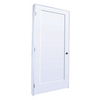


Most homeowners assume buying a new door is a quick decision. You pick a style, order it, and it arrives ready to go. That assumption is where a lot of renovation headaches start, because there are two different products and they are not interchangeable.
One type comes with a frame already built around it; the other is just the door panel on its own. Choosing the wrong one for your situation means either paying for work you did not need or finding out mid-installation that your new door will not fit the way you expected.
When people visit an interior door shop, the conversation usually goes straight to style. Shaker or flat panel, glass or solid, single panel or multi-panel. Those are fair questions, but they belong later in the process. The first question to ask is a practical one about what your existing door opening actually needs.
This guide breaks down exactly what pre-hung and slab doors are, when each one makes sense, and how to figure out which is right for your home before you spend a dollar.
Understanding Pre-Hung and Slab Doors: What Every Homeowner Should Know Before Buying

Before we get into specific situations, it helps to understand exactly what these two products are, because the names alone do not tell the whole story.
1. What a Slab Door Actually Is
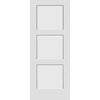
A slab door is a flat panel and nothing more. It is the door itself, without any frame, without hinges, and without any hardware pre-installed. When you order a slab, you receive a rectangular panel that you or your contractor will need to fit into an existing door frame. The hinges from your old door can be reused, the frame stays in place, and you are simply swapping the door panel itself. This works well when the existing frame is in good condition, properly square, and the hinge positions are standard.
For closets, pantries, and rooms where you are refreshing an older door that is still sitting in a solid frame, a slab is often the faster and more affordable route. They also give you full control over your hardware choices since nothing comes pre-bored or pre-drilled beyond the basic hole for the door handle.
For instance, if you are replacing six interior doors in a hallway renovation and all the frames are sound, slabs can cut down your overall costs significantly without sacrificing the finished look you are after.
2. What a Pre-Hung Door Actually Is
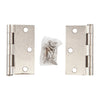
A pre-hung door arrives as a complete unit. The door slab is already mounted inside a wood frame, with hinges attached and hinge pockets already cut into the frame. All you need to do is set the entire assembly into the rough opening, adjust it until it sits perfectly straight and level, fasten it in place, and add your trim.
The frame is new, the hinges are new, and the interior door is aligned and ready to operate from the moment it is installed.
This makes pre-hung doors the standard choice for new constructions and for situations where the existing frame is damaged, out of square, or simply worn out.
Pre-hung doors typically reduce installation time from two or more hours per door down to thirty to sixty minutes. Because the door is already hung and adjusted in the factory, the risk of misalignment during installation is much lower.
For instance, if you are adding a doorway to a newly framed wall or replacing a door frame that has shifted over the years, a pre-hung unit is almost always the more practical choice.
3. The Frame Is the Deciding Factor
The important thing to check before you choose between a slab and a pre-hung door is the condition of your existing frame. Run your hand along the side jambs and the head jamb. Look for rot, soft spots, or areas where the wood has shifted away from the wall. Take a level to the hinge jamb and check whether the frame is still plumb.
Then look at the door itself. If the existing door sticks, drags along the floor, or shows a gap that is wider on one side than the other, those are signs that the frame has moved. A warped or damaged frame cannot be fixed by swapping in a new slab. You would simply end up with a new door that refuses to close properly.
Older homes, particularly those built before the 1980s, are more likely to have frames that have settled or shifted over the decades. Even a frame that looks fine from a distance can have hidden damage near the bottom, where moisture tends to collect. A quick check with a flashlight and a firm knock along the jamb will often reveal hollow or soft spots beneath the paint.
4. New Openings Always Need Pre-Hung Doors
If you are adding a door to a room that does not currently have one, the choice is straightforward. In that case, a pre-hung door is the only option that makes practical sense. There is no frame to work with, which means a slab would leave you building one from scratch anyway.
Pre-hung doors are specifically designed for this situation. The frame is already assembled, and the door is aligned within it, so your job on site is installation rather than carpentry. This applies to basement renovations, room additions, home office conversions, and any project where a new wall has been framed and a door opening has been left.
Even experienced contractors prefer pre-hung units for new openings because the factory alignment takes care of one of the trickiest parts of the job, which is getting the door to hang perfectly within a freshly built frame.
Pre-hung doors come in both hollow-core and solid-core builds. For instance, many homeowners finishing a basement will use hollow-core pre-hung doors for closets to keep costs down and solid-core ones for bedrooms, where reducing noise between rooms matters.
5. Measuring Is Critical for Both Types
Whether you are buying a slab or a pre-hung door, getting your measurements right before you order is non-negotiable. For a slab replacement, measure the existing door, including its height, width, and thickness. Do not measure the opening. The door you buy needs to match the door you are removing, not the hole in the wall. Standard Canadian residential doors are 80 inches tall, and widths typically run from 24 inches up to 36 inches in two-inch increments.
For a pre-hung door, you measure the framed hole in the wall and leave a small gap on each side so the frame can be adjusted during installation. A good rule of thumb is to add two inches to the door width and two and a half inches to the door height when sizing your opening.
Door thickness matters too, with hollow-core doors measuring 1 3/8” thick and solid-core doors coming in at 1 ¾” inches.
If your home has tall ceilings, door heights of 84, 90, or 96 inches are available. Visiting an interior door shop in person lets you see size options on the floor and confirm your measurements with a specialist before committing to an order.
6. Swing Direction and Hand Orientation
One detail that trips up a lot of buyers is swing direction. A door's hand, whether it is left-handed or right-handed, describes which side the hinges are on and which direction the door swings when you open it. Getting this wrong on a pre-hung door means the entire unit will not work in your opening without significant changes.
To figure out the hand of a door, stand in the doorway facing the direction the door swings toward. If the hinges are on your left, it is a left-hand door. If they are on your right, it is a right-hand door. For slab replacements, you simply match the hand of the door you are removing. For new openings, you need to decide the swing direction before you order.
Some pre-hung doors can be hung on either side, though this is not the case with every product, so it is worth confirming before you buy.
Noting the swing direction on a rough sketch of your floor plan before you shop saves a lot of unnecessary back and forth. For instance, interior door suppliers in Toronto who offer in-person consultations can help you work out the correct hand using your measurements and a simple drawing.
7. Cost Differences and What You Are Really Paying For
Slab doors are almost always less expensive than pre-hung doors because you are buying less product. The cost comparison only tells part of the story, though, because the full picture includes installation.
A pre-hung unit includes a new frame, hinges that are already fitted, and a door that has been aligned at the factory, all of which add up in terms of labour and materials.
If you are hiring a contractor, a pre-hung door takes about half the time to install compared to fitting a slab into an existing frame, which can reduce your labour costs.
If you are comfortable doing the work yourself, a pre-hung door is easy to handle, even if it costs more to buy.
When shopping for interior doors for sale, it is worth confirming whether the price includes the door only or the door with the frame, since product listings do not always make this clear.
For instance, a hollow-core slab might look very affordable upfront, but once you factor in a new frame, hinges, and installation labour, the total cost often ends up closer to a pre-hung option than most homeowners expect.
How These Choices Connect to What You Will Find In Store and Online
Now that you understand the fundamentals, here is how these decisions connect to the inventory and buying experience you will encounter, whether you shop in person or online.
Slab vs. Pre-Hung at the Product Level
When you browse a door collection, most products indicate whether they are available as slab only, pre-hung only, or both. At Home Care Supply, most door styles are available in both configurations, which means you are not limited by style when you make your structural decision first.
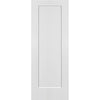
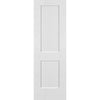
A Shaker two-panel door that suits your home perfectly is likely available as a slab if you have a solid frame, or as a pre-hung unit if you need the whole assembly. Solid-core builds are available in both formats, too. This is important because solid-core doors are the right choice for bedrooms and home offices where sound dampening genuinely matters.
Checking the product page carefully before ordering ensures you add the right variant to your cart.
If you are ordering multiple doors for a renovation, mixing slabs and pre-hung units across different rooms is perfectly normal and often the most budget-conscious approach.
For instance, replacing closet doors with hollow-core slabs while upgrading bedroom doors to solid-core pre-hung units is a very common and practical combination.
Shopping In Person or Ordering Online
There are two ways to buy when you are ready to move forward. If you prefer to see the product before committing, Home Care Supply’s Vaughan and Burlington showrooms carry floor samples across multiple door styles. You can check how a solid-core door feels compared to a hollow-core one, look at frame construction on pre-hung units, and get a clear recommendation from a specialist based on your measurements. For homeowners who already know what they need, ordering online is straightforward.
Doors ship Canada-wide in three to five business days, and customers in the GTA can choose to pick up their order from either showroom location, with most orders ready within one to two business days.
Most product listings specify the opening size a pre-hung unit is designed for, which removes most of the uncertainty from ordering remotely. A 30-day return policy means you are not taking a significant risk when you order carefully.
Fire-Rated and Special Application Doors
One area where the pre-hung vs. slab question becomes especially important is fire-rated doors. If your home is a multi-unit build, a townhouse, or has an attached garage, the National Building Code of Canada may require fire-rated doors between certain spaces.
Fire-rated doors are almost always specified as pre-hung units because the rating applies to the door and frame assembly together, not just the slab. A fire door slab installed in a non-rated frame does not deliver the protection it is built to provide.
Ninety-minute fire-rated pre-hung options are available for multi-unit builds where the building code requires them. If you are replacing a door in a fire-rated application, you need to confirm that the full assembly, including the slab, frame, hinges, and hardware, meets the required rating.
For instance, renovating a condo or townhouse without checking fire-rated door requirements can create problems at the inspection stage that are much more expensive to correct after the fact. That’s why it is better to address this question during the initial purchase at a qualified interior door shop.
Choosing between a pre-hung door and a slab comes down to the condition of your existing frame and the type of opening you are working with. If the frame is solid, square, and in good shape, a slab will do the job well and cost less. If the frame is damaged, out of square, or if you are starting with a new opening, a pre-hung door is the more practical choice. Measure carefully, confirm your swing direction, and match the door type to what your opening actually needs. A reliable interior door shop will carry both options across a wide range of styles. The team at Home Care Supply is available in person at our Vaughan and Burlington showrooms and online across Canada to point you in the right direction.


