





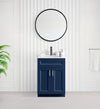
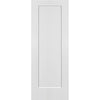
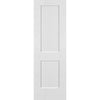
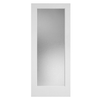



Choosing the right interior door for your home is only half the job. The other half is everything that goes around it, and that is where a lot of homeowners go wrong. Hardware, paint colour, and flooring all affect how your door looks once everything is in place, and most Canadian homeowners only notice these gaps after everything is already installed.
Shaker doors are a common choice in Canadian homes, and there are good reasons for that. Their clean lines and recessed panel design work well in both modern and traditional spaces. That same simplicity, though, means that everything paired with them becomes more noticeable, not less.
The good news is that these mistakes are easily avoidable. Knowing what they are before you start saves you money, frustration, and the cost of fixing work that looked right in theory but fell short in the room.
In this blog, we will go through five mistakes Canadian homeowners commonly make when pairing hardware, paint, and flooring with Shaker-style interior doors. This way, you can avoid them before the work begins.
Getting the Pairings Right: What Most Canadian Homeowners Miss With Shaker Doors

Shaker doors hold up well in most Canadian homes, but the decisions made around them still require attention. Here is a look at what tends to go wrong and how to get each detail right from the start.
Choosing Hardware Based on Looks Alone, Without Thinking About Finish Consistency
This is one of the most common and visible mistakes in any home renovation. A homeowner falls in love with a matte black lever handle at the store, buys it for every door in the house, and then realizes it clashes with the brushed gold faucets in the bathroom and the polished nickel light fixtures in the hallway. The result is a home where the hardware choices feel random rather than considered.
Finish consistency does not mean that every single fixture has to match perfectly. It means that the hardware and fixtures in the room should all share the same underlying tone. Warm metals like brushed gold and bronze read well together. Cool metals like brushed nickel and chrome do the same.
Mixing warm and cool tones in the same space is where things tend to fall apart. Before buying any hardware for a Shaker interior door, take stock of every other metal finish already present in the room, including light fixtures, vent covers, and plumbing fixtures.
Painting the Door the Same Colour as the Wall and Losing the Definition Entirely
This tends to happen when homeowners are going for a clean, minimal look. The thinking is that matching the door to the wall will make the space feel bigger. In some situations, that holds true. But in most rooms, painting Shaker-style interior doors the exact same colour as the surrounding wall takes away the very thing that makes them worth having.
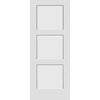
A Shaker door has a flat recessed square or rectangle in the centre, surrounded by a plain flat border around the edges. That detail only shows up clearly when there is some contrast or shadow to define it. When the door and wall are the same flat colour, that detail disappears. You end up with a surface that looks like drywall with a handle on it.
This does not mean the interior door needs to be a noticeably different colour. Even a difference in paint glossiness does the job. For instance, painting the wall in a low-gloss finish and the door in a higher-gloss finish makes it easy to see where the wall ends and the door begins.
White doors against white walls work well when the gloss levels are different. The door looks clearly like a door, the wall looks clearly like a wall, and the room looks properly finished.
Ignoring the Undertone of the Paint Colour When Matching to Wood Flooring
Paint colours are never truly neutral, even when they look like they are. Every white, grey, and beige has an undertone, which is a subtle base colour sitting beneath the main colour you see on the wall. That undertone either works with your flooring or against it.
This is one of those mistakes that is hard to catch early. Each colour looks like a reasonable choice on its own. The problem only becomes visible once the flooring, walls, and door are all installed in the same space and the undertones start pulling against each other.
Warm-toned wood flooring—for instance, oak or maple with a honey or amber finish—tends to clash with paint colours that carry a strong blue or green undertone. The floor has a warm amber tone while the walls and door have a cool blue or green tone, and the two simply do not look right together in the same space.
Shaker interior doors make this more noticeable because they cover a large, flat area of the wall. The paint colour on the door is always visible right next to the flooring below it. To avoid this problem, bring your flooring sample when choosing paint, hold both together in natural light, and check that the subtle base colour in the paint works with the colour of your flooring rather than against it.
Choosing the Wrong Door Casing Profile and Creating a Style Mismatch
The casing is the flat trim board that wraps around the door opening where the door frame meets the wall. Most homeowners treat it as an afterthought. They choose the door first, pick a casing that looks close enough, and move on. The problem is that casing profiles (meaning the shape and style of that trim board) do not all work equally well alongside a Shaker door.
Shaker-style interior doors are built around clean, straight lines and flat surfaces. Pairing them with a heavily decorative or curved casing profile puts two very different looks in the same doorway. The door is plain and straight while the casing is ornate and curved. The two end up looking like they belong in different rooms.
The right casing for a Shaker door is one that follows the same straightforward approach as the door itself. A flat, square-edged casing or a simple stepped profile shares the same clean lines as the door, and the whole doorway ends up looking like one deliberate choice rather than two separate ones.
Casing width matters too. A very narrow casing on a wide door opening looks insufficient and unfinished. An oversized casing profile on a standard door opening makes the door look smaller than it actually is. Getting the width right means the doorway looks properly finished from top to bottom.
How the Right Products Make These Decisions Easier

Getting the pairings right becomes much easier when the products you are working with are consistent in quality and finish. Here is where the right supplier makes a real difference.
Starting With a Primed Door Gives You Full Control Over Paint Colour
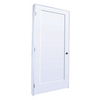
One of the practical advantages of buying a primed Shaker door is that it arrives ready to be painted in whatever colour you need. You are not stuck with a colour that was chosen during the manufacturing process and may not suit your specific room. This is especially useful when you are trying to match the paint colour on the door to the tone of your flooring and the finish of your hardware.
A primed door also gives you a chance to test your paint colour before committing to it. You can apply a small amount of your chosen paint directly onto the door, then hold your flooring sample and hardware next to it in the natural light of the room to see whether they all work together.
A properly primed door holds paint more evenly than an unprimed surface. The colour goes on consistently across the flat centre panel and the border around it, and the finished result looks even and clean throughout.
Shaker doors with glass panels also benefit from starting with a primed surface. The glass introduces its own light into the space, and the paint colour around it needs to work with that.
Buying Your Casing and Door From the Same Supplier Reduces the Risk of a Mismatch
When the door and the casing come from different suppliers, there is always a chance that the profiles do not sit well together once installed. This is not always an obvious problem, but it is the kind of inconsistency that becomes noticeable in a finished room.
Buying both from the same supplier means the profiles have already been considered alongside each other. The shapes and widths are designed to work together, so the casing and door look like one complete doorway rather than two separate purchases.
Buying from one supplier makes the practical side of the project simpler too. You are dealing with one delivery, one return process if something is wrong, and one team to contact if you have questions.
For instance, a supplier that carries both Shaker interior doors and a range of MDF casings is worth considering. MDF casings are trim boards made from medium-density fibreboard, primed and ready to paint, and available in modern and colonial profiles. Having both products available in one place means you can complete the doorway properly without sourcing from multiple places.
Matching Your Hardware to the Door Construction Makes a Practical Difference
Choosing hardware is not just about picking a finish that looks right. The construction of the door itself determines which hardware will hold up and function properly. A solid-core door (i.e., one built with a dense internal structure rather than an empty cavity) has real weight to it. Heavy, well-built lever handles and latches suit this kind of door because they match its weight and feel.
A hollow-core door, on the other hand, is built with an empty or partially empty interior, making it lighter. It works well in spaces where sound privacy is less of a concern, like a pantry or a linen closet. Choosing very heavy hardware for a lightweight hollow-core door can put too much stress on the hinges, causing the door to sit unevenly in its frame.
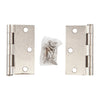
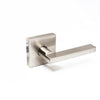
Matching hardware to door construction is a detail that makes a practical difference to how the door works day to day. A supplier that carries solid-core Shaker interior doors is a good starting point. One that also stocks compatible door hinges and lever handles in matching metal finishes means you can make all these decisions together. You know the door and hardware are compatible before anything is ordered or installed.
The right Shaker-style interior door is only part of what makes a room look finished. The hardware finish, paint colour, flooring tone, and trim board profile all play roles in how the completed space looks. Each of the mistakes covered here is common, and each is avoidable with a bit of planning before the work starts. Home Care Supply has Shaker interior doors, trim, and hardware all available in one place, which makes it easier to confirm everything works together before you buy.


