














Working from home has changed how many Canadians think about the rooms in their house. For them, a dedicated home office is no longer a luxury but a practical necessity. And the door separating that space from the rest of the house plays a bigger role than most people give it credit for. The wrong door lets in noise, undermines concentration, and makes video calls unprofessional.
To that end, buying an interior door online has made it easier than ever to find the right option without settling for whatever your local hardware store has in stock. The selection is broader, the specs are clearer, and the doors ship directly to your address.
Noise and privacy are not the same problem, but they are closely related. A door that blocks sound also limits visual distractions and signals to the rest of the household that work is happening. Getting both right comes down to knowing what to look for before you order.
In this blog, we will cover what you need to know about buying an interior door online for your home office so that noise and privacy are no longer problems.
Let’s get started.
Buying an Interior Door Online for Home Offices: Choosing the Right Door for Noise and Privacy
The door you choose for your home office will affect your focus, your professionalism on calls, and the overall comfort of everyone else in the house. Here is what you need to know.

The Difference Between Solid and Hollow-Core Doors
When you look for an interior door online, the first decision you will face is whether to go for solid core or hollow core. This choice matters more for a home office than for almost any other room.
A hollow-core door is built with a cardboard honeycomb interior sandwiched between two thin sheets of wood composite. It is lightweight, affordable, and perfectly fine for closets or pantries where sound is not a concern.
A solid-core door, by contrast, is filled with a dense wood composite or particleboard material that adds significant mass to the panel. That mass is what stops sound from passing through easily.
The physics of soundproofing comes down to weight and density. A heavy door simply absorbs more acoustic energy before it can travel to the other side. For a home office where you are taking client calls or concentrating for hours at a time, solid core is not an upgrade; it is the right starting point. Solid-core doors also feel noticeably heavier when you close them, which helps reinforce the separation between your workspace and the rest of the house.
Why Mass Matters More Than Thickness Alone
A lot of people assume that a thick door will block more sound. That is only partially true. What actually determines sound blocking is mass per square metre, not how thick the door looks. A hollow-core door can look identical to a solid-core one from the outside but perform very differently once the house is full of noise.
The door itself is only one part of the picture. The seal around the frame matters just as much. But when you are choosing an interior door online, focusing on solid-core construction first gives you the best base from which to work.
A solid-core door will not block out all noise, but it will make a noticeable difference. It reduces the sound of conversations, TV, and general household activity coming through from the other side.
For instance, a solid-core door on a bedroom used as an office can reduce noise enough to make a real difference on video calls.
Pre-Hung vs. Slab: Which One Should You Order for a Home Office?
Once you have decided on solid-core construction, the next choice is whether to order a pre-hung door or a slab. A slab door is the panel only, with no frame or hinges included. It makes sense when your existing door frame is straight, square, and in good condition, and you are simply swapping out the door itself.
A pre-hung door comes with the door already mounted inside a new frame, ready to fit into the opening. For a home office where the existing frame has gaps, warps, or a poor seal around the edges, pre-hung is often the better choice because gaps in the frame are one of the biggest causes of sound leakage.
When you shop for an interior door online, most retailers list both options clearly with price differences, so you can choose based on the actual condition of your existing frame.
The Role of Door Style in a Home Office Setting
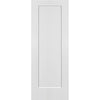
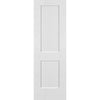
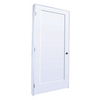
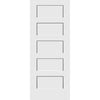
Panel style affects both the look and sound performance of your door, but, more importantly, it affects how your workspace feels day to day. A 1-panel Shaker door has a clean, modern look and works well in a minimal or contemporary office. A 2-panel Shaker is the more versatile option and works across modern, transitional, and farmhouse interiors equally well.
Glass panel doors, whether frosted, clear, or reeded (textured, semi-transparent glass), are popular choices for home offices that get natural light from an adjacent hallway or living area.
However, glass panels do reduce sound performance compared to a fully solid door. If noise is your main concern, a solid panel door without any glass is the better choice. If you work in a quieter household and natural light matters more, frosted glass is a reasonable middle ground. It lets light in while keeping the view into your office private.
Understanding Door Height and Width for a Proper Fit
Getting the dimensions right before you order an interior door online is important. If your home has high ceilings, nine or ten feet, you may need an 84-inch or 96-inch door.
Width is equally important. Most interior door openings are 28, 30, 32, or 36 inches wide, and the rough opening needs to be about two inches wider than the door itself to allow for the frame.

For a home office, a 32- or 36-inch door is worth considering if your opening allows for it. A wider door feels more solid and does a better job of closing off the space from the rest of the house.
Whether you order online or visit an interior door store in person, ordering the wrong size means delays and additional costs. Measure the opening carefully and check the return policy before you place your order or head in store.
How Door Seals and Weatherstripping Affect Your Sound Environment
The door panel itself is only part of the noise equation. A solid-core door fitted in a frame with visible gaps around the edges will still let sound through those gaps freely. The seal between the door and the frame is what completes the job. When you install your new office door, check all four sides of the frame for consistent contact with the door face when it is closed.
The bottom of the door is particularly important. A door sweep along the bottom edge will reduce the amount of sound that travels under the door from a hallway or living area. Sealing the bottom gap alone can make a noticeable difference to how much noise gets through. These additions are inexpensive and straightforward to apply, but they work best when the door itself is solid core, and the frame sits straight in the opening.
Fire Ratings: When They Apply to Home Offices
Most standard home office doors do not require a fire rating. However, if your office is attached to a garage, or if your home is a multi-unit build or secondary suite, fire-rated doors may be required under the Ontario Building Code.
A 20-minute or 90-minute fire-rated door is built with additional core materials that slow the spread of flame and meet specific testing standards.
If you are converting a garage space or finishing a secondary suite that includes a home office, it is worth checking local requirements before you order. When shopping from interior door suppliers in the Toronto area, fire-rated options are typically listed clearly in the product specifications so you can confirm compliance before ordering. Checking those specs before you buy is a simple step that saves you from ordering the wrong door for a code-required application.
What to Look for in an Online Door Retailer Before You Buy
Not every place that sells interior doors online is the same. A few things are worth checking before you commit.
First, confirm that the retailer carries solid-core options clearly labelled as such, rather than vaguely described as "premium."
Second, check the shipping timeline and whether the doors ship from a Canadian warehouse, since cross-border shipping can add weeks and unexpected costs to your order.
Third, look for a return policy that gives you enough time to inspect the door for damage on arrival.
Fourth, check whether pre-hung options are available in the style you want, not just slab versions.
A good interior door shop will clearly list product specs, ship from Canadian stock, and have an easy-to-understand return policy. Those three things together give you a reasonable level of confidence that what you order will arrive on time, in good condition, and in the right configuration for your home office.

How Home Care Supply Supports Home Office Door Projects
Home Care Supply carries a broad range of interior door styles across Shaker, glass panel, barn, and flush configurations, with both solid core and hollow core options clearly labelled throughout the catalogue.
For a home office, the solid core Shaker range is the most practical starting point. One-panel and 2-panel options are stocked in standard widths from 24 to 36 inches, with both slab and pre-hung configurations available. Frosted glass 1-panel doors are also available for offices where natural light matters. The 30-day return policy gives you room to order with confidence, whether you are replacing one door or working through a full home project.
A home office works best when the space around it supports focused, uninterrupted work. The door plays a bigger role in that than most people expect. Choosing the right interior door online comes down to a few straightforward decisions. Pick solid core over hollow core, choose the right panel style for your space, measure the opening carefully, and buy from a retailer with clear product specs and reliable Canadian shipping. Seal the frame properly and add a door sweep at the bottom, and you will have a home office that stays quiet regardless of what is happening in the rest of the house. Home Care Supply has the range, the stock, and the shipping coverage to make that process simple.


