


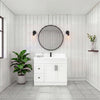
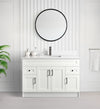
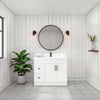
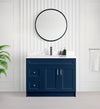
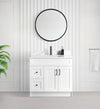
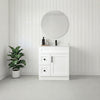
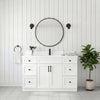
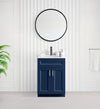


Picking the right edge profile for a vanity countertop feels like a small detail. But it is one of those decisions that quietly shapes how your entire bathroom looks and feels every day, long after the renovation work has been completed.
Most homeowners in the Toronto area put a lot of time into choosing their bathroom’s tile, paint, and fixtures—while almost none goes into the edge profile. That gap is where mistakes happen.
The edge profile is the finished border that runs along the front and sides of your countertop. It determines how the surface reads visually, how easy it is to clean, how safe it is around kids, and how well it holds up. The material your countertop is made of—whether it’s quartz, porcelain, or solid wood—affects which profiles are suitable.
Here, we discuss how to select the right edge for a 48-inch-wide bathroom vanity countertop for your Toronto-area home. This will help you make a confident, informed decision that you will still feel good about five years from now.
A Simple Guide to Edge Profiles for Your 48-Inch Vanity Countertop
The edge profile of your countertop plays an important role in the overall look and feel of your bathroom. Here is what you need to know before making your choice.
1. Understand What an Edge Profile Does
The edge profile is not just about looks. It has a real job to do.
A countertop without a finished edge looks bare and incomplete. The profile protects the corner of the surface—which is the part most likely to take a hit—from chipping, moisture, and daily wear. A sharp corner will chip far more easily under a hard knock than a rounded or bevelled one.
The profile also affects how water moves on the counter. A slightly raised edge or an eased profile can stop water from running off the counter and onto your cabinet doors below.
For a 48-inch bath vanity countertop in the Toronto area, where the counter gets used every day around a sink, this is more important than most people think. The profile gives the countertop a finished, intentional look that ties the whole vanity together.
2. The Eased Edge: Simple, Clean, and Honest
The eased edge is the simplest profile you can choose. It takes the square corner of a countertop slab and softens it just slightly enough to remove the sharpness, but without adding any dramatic curve.
It is a popular choice for homeowners who want a clean, no-fuss bathroom. Nothing about this edge draws attention away from the rest of the design. For example, if your bathroom has flat-panel cabinets, plain hardware, and a simple colour palette, an eased edge will fit in without standing out.
It is also one of the easiest profiles to keep clean because there are no grooves or tight curves where soap and dirt can build up. Eased edges work well on almost every countertop material, including quartz, porcelain, and solid wood. It is a solid, low maintenance choice.
3. The Bevelled Edge: Structure With a Bit of Character
A bevelled edge means the top corner of the countertop is cut at an angle instead of being square or rounded. The result is a straight diagonal line. It gives the counter a tidy, well-defined appearance.
It works particularly well in bathrooms that blend modern design with a touch of traditional detail. Think Shaker-style cabinetry paired with clean, simple fixtures. The angle of the bevel can vary; a small 3 mm bevel is very subtle, while a wider one creates a more prominent visual line.
For a 48-inch bathroom vanity, where the countertop is wide enough to show off the profile from any angle, a bevelled edge can make the whole setup look well chosen.
Bevelled edges hold up well on quartz and porcelain surfaces, and they resist chipping better than a sharp square edge would under daily bathroom conditions.
4. The Bullnose Edge: Soft, Rounded, Family-Friendly
The bullnose edge is a fully rounded profile. The top corner curves smoothly over and down, creating a half-circle cross-section at the edge.
It is the softest, safest option available, which makes it a preferred choice for families with young children, as there are no corners to bump into and no sharp angles to worry about.
The bullnose has a relaxed, traditional quality to it that suits bathrooms with a warmer, more classic feel. If your renovation features natural wood tones, warm hardware finishes like brushed gold or oil-rubbed bronze, and softer colour palettes, a bullnose will feel at home.
It works well on countertop materials that tend to chip at the corners, because the rounded shape holds up better under impact than a sharp edge. The only downside is that the curve needs slightly more care when cleaning compared to a flat, eased edge
5. The Ogee Edge: Traditional, Detailed, and Best Used Carefully
The ogee edge is the most detailed profile you will commonly find. It has an S-shaped curve along the edge of the countertop—one curve goes inward and then flows into one that goes outward. It is a profile that has been used in traditional and formal bathroom designs for a long time, usually alongside raised-panel cabinets, detailed hardware, and heavy material choices.
If your bathroom has a strong traditional look throughout, an ogee edge can be a good finishing detail. If not, the profile will look out of place. The point is that it needs to match the rest of the space.
If the 48-inch vanity sink sits in a bathroom in your Toronto-area home that is mostly modern, with just a few traditional touches, the ogee will not belong there. Also, the grooves in an ogee edge collect dirt and are harder to clean, so keep that in mind.
6. The Waterfall Edge: A New Option Worth Knowing
The waterfall edge is different from the other profiles on this list. Instead of just finishing the front corner of the countertop, the material runs straight down the side of the vanity cabinet all the way to the floor. There is no gap or break — the surface continues from the top down to the bottom in one uninterrupted panel.
It works best with quartz or large-format porcelain slabs, where the pattern or colour can run from the top surface down the side without looking mismatched. It also costs more than a standard edge profile because it needs extra material and more careful cutting and fitting.
It works best in bathrooms with a clean, minimal look, where the countertop material is meant to stand out. If your bathroom is already designed that way, a waterfall edge is a reasonable option to look at seriously.
7. Match the Profile to Your Renovation Style, Not Just Your Personal Taste
This is the point that most people overlook. What you personally like matters, but the profile also needs to work with the rest of your bathroom. A profile that looks good on its own can still look wrong once installed if it does not match the other details in the space.
The basic guide is this: simple, straight profiles like eased and bevelled edges work well in modern bathrooms. Rounded profiles like bullnose work in both modern and traditional spaces. Detailed profiles like an ogee belong in bathrooms with a traditional design throughout. The waterfall profile suits bathrooms with a clean, minimal look where the material is the main feature.
For a 48-inch vanity countertop in the Toronto area, where the countertop covers a wide surface, the profile will be easy to see from across the room — so getting it right matters. Look at the other flat surfaces in your bathroom, such as windowsills, shelving, or tile borders, and make sure your edge choice does not clash with those details.
What to Keep in Mind When Shopping in the Toronto and Burlington Areas

Whether you are browsing online or walking through a showroom, the vanity material and profile need to work together.
Quartz vs. Porcelain (And How Each Takes a Profile)
Not every edge profile works on every material, and not every profile looks good on every surface. Quartz is a dense and uniform material, which means it can take detailed profiles like ogee and bevelled edges without any issues. Because quartz is manmade, the surface is consistent throughout, so a detailed edge cut will look even and clean. A porcelain slab is harder and generally looks better with simpler profiles, such as eased or bevelled edges, which do not need a deep cut. Porcelain can chip on very tight curves, which is something to know before you choose a fully rounded profile.
Home Care Supply stocks both quartz and porcelain countertops and can tell you which profiles are available for each specific slab. For a 48-inch bathroom vanity in Canada, where the countertop runs the full width of the piece, both materials are good options, as long as you pair them with a profile that suits them.
The Sink Configuration Affects Your Edge Profile Options
The type of sink you choose can affect which edge profiles are suitable.
An undermount sink sits below the countertop surface, so the rim is hidden, and the full edge of the counter is visible on all sides. This works well with almost any profile.
A vessel sink sits on top of the counter and draws attention upward, which means the edge profile is less noticeable—so you have more flexibility there.
A drop-in or integrated sink has its own visible rim line, and a very detailed edge profile can clash with that line visually.
Home Care Supply carries bathroom sinks in different configurations, so you can look at the bathroom vanity and sink at the same time, whether in the showroom or online. Sorting out that combination early in your renovation avoids having to go back and change things later.
Think About Maintenance Before You Commit
Different edge profiles need different levels of upkeep. Simple profiles like eased and bevelled edges are easy to wipe down, as there are no grooves or tight curves where soap or dirt can sit. More detailed profiles, like ogee, have small grooves that collect dirt over time. Cleaning them properly means using a narrow brush or cotton swab, not just a cloth. For a bathroom that gets used every day, that extra cleaning effort adds up quickly.
Bathrooms in the Toronto area deal with humidity changes across the seasons, which can affect how well a material holds up. A simpler profile on a good quality material will generally be easier to keep clean and maintain.
If your bathroom gets heavy daily use, think about how easy the profile is to clean before you decide on the look. A profile that is hard to keep clean will start to show it within a year or two.
Choosing an edge profile is one of those decisions that feels small on paper but shows up every single day in how your bathroom looks and feels. The right profile ties the whole space together quietly. You might not notice it consciously, but you will feel the difference. Think about your renovation style first, your material second, your sink configuration third, and your maintenance reality last. Those four considerations will point you clearly toward the right choice. Are you in the market for a 48-inch vanity countertop in the Toronto area? Want to see the options in person before deciding? Home Care Supply has the inventory and the honest, knowledgeable staff to help you get it right the first time.


